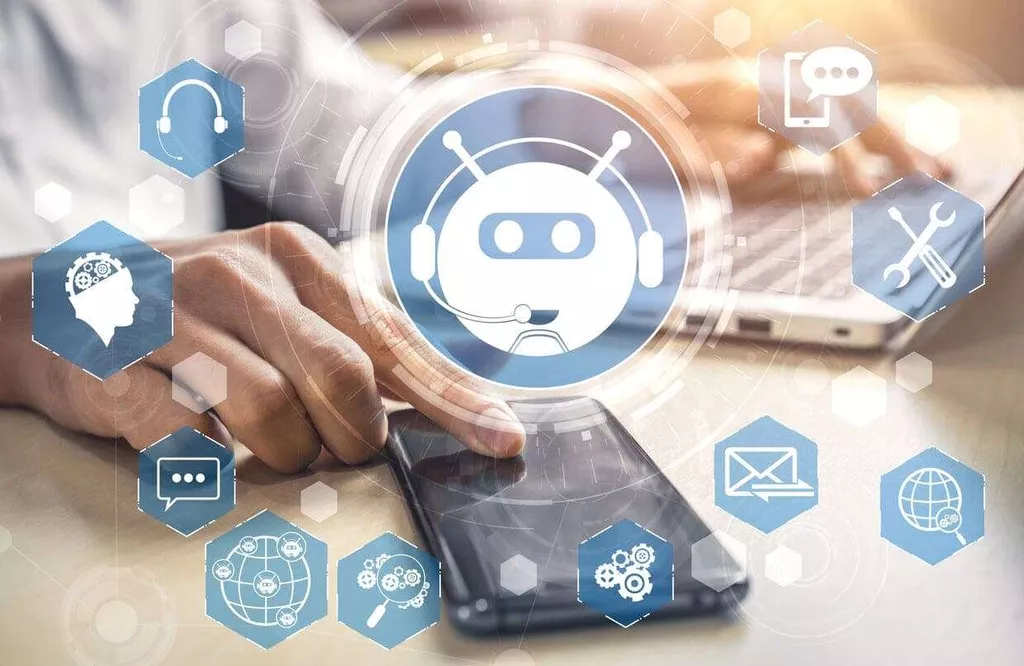
Chatbot vs Conversational AI: Differences Explained

Chatbots Vs Conversational AI Whats the Difference?

difference between chatbot and conversational ai

Conversational AI bots have found their place across a broad spectrum of industries, with companies ranging from financial services to insurance, telecom, healthcare, and beyond adopting this technology. While “chatbot” and “conversational Chat PG ai” are often used interchangeably, they encompass distinct concepts with unique capabilities and applications. See why DNB, Tryg, and Telenor areusing conversational AI to hit theircustomer experience goals.

Despite the technical superiority of conversational AI chatbots, rule-based chatbots still have their uses. If yours is an uncomplicated business with relatively simple products, services and internal processes, a rule-based chatbot will be able to handle nearly all website, phone-based and employee queries. Every conversation to a rule-based chatbot is new whereas an AI bot can continue on an old conversation. This gives it the ability to provide personalized answers, something rule-based chatbots struggle with.

Use cases for chatbot vs. conversational AI in customer service?

These advanced systems are capable of delivering personalized, lifelike experiences, making them suitable for companies focused on innovation and enhancing long-term customer satisfaction. Conversational AI is trained on large datasets that help deep learning algorithms better understand user intents. The fact that the two terms are used interchangeably has fueled a lot of confusion.

difference between chatbot and conversational ai

However, conversational AI chatbots are better for companies that want to offer customers and employees a detailed and responsive service that’s capable of handling more challenging external and internal queries. If your business requires multiple teams and departments difference between chatbot and conversational ai to operate because of its complexity or the demands placed on it by customers and staff, the new AI-powered chatbots offer much greater value. In recent years, the level of sophistication in the programming of rule-based bots has increased greatly.

They follow a set of predefined rules to match user queries with pre-programmed answers, usually handling common questions. The computer programs that power these basic chatbots rely on “if-then” queries to mimic human interactions. Rule-based chatbots don’t understand human language — instead, they rely on keywords that trigger a predetermined reaction. AI-based chatbots, on the other hand, use artificial intelligence and natural language understanding (NLU) algorithms to interpret the user’s input and generate a response. They can recognize the meaning of human utterances and natural language to generate new messages dynamically.

With this bot, Belfius was able to manage more than 2,000 claims per month, the equivalent of five full-time agents taking in requests. Babylon Health’s symptom checker uses conversational AI to understand the user’s symptoms and offer related solutions. It can identify potential risk factors and correlates that information with medical issues commonly observed in primary care.

Companies from fields as diverse as ecommerce and healthcare are using them to assist agents, boost customer satisfaction, and streamline their help desk. A chatbot and conversational AI can both elevate your customer experience, but there are some fundamental differences between the two. While chatbots and conversational AI are similar concepts, the two aren’t interchangeable. It’s important to know the differences between chatbot vs. conversational AI, so you can make an informed decision about which is the right choice for your business. Conversational AI can be used to better automate a variety of tasks, such as scheduling appointments or providing self-service customer support.

What is a Chatbot?

Independent chatbot providers like Amelia provide direct integrations of its technology into the important business apps companies use, such as order management systems. Many of the best CRM systems now integrate AI chatbots directly or via third-party plug-ins https://chat.openai.com/ into their platforms. Rule-based chatbots, the previous dominant automated messaging technology, could never handle something this complex. In truth, however, even the smartest rule-based chatbots are nothing more than text-based automated phone menus (IVRs).

difference between chatbot and conversational ai

At the same time that chatbots are growing at such impressive rates, conversational AI is continuing to expand the potential for these applications. The AI impact on the chatbot landscape is fostering a new era of intelligent, efficient, and personalized interactions between users and machines. Both chatbots and conversational AI are on the rise in today’s business ecosystem as a way to deliver a prime service for clients and customers. However, both chatbots and conversational AI can use NLP and find their application in customer support, lead generation, ecommerce, and many other fields. As we mentioned before, some of the types of conversational AI include systems used in chatbots, voice assistants, and conversational apps. Both types of chatbots provide a layer of friendly self-service between a business and its customers.

Chatbots vs. Conversational AI: What Makes Them So Different?

Conversational bots can provide information about a product or service, schedule appointments, or book reservations. While virtual agents cannot fully replace human agents, they can support businesses in maintaining a good overall customer experience at scale. In fact, by 2028, the global digital chatbot market is expected to reach over 100 billion U.S. dollars. While a traditional chatbot is just parroting back pre-determined responses, an AI system can actually understand the context of the conversation and respond in a more natural way. The natural language processing functionalities of artificial intelligence engines allow them to understand human emotions and intents better, giving them the ability to hold more complex conversations. At their core, these systems are powered by natural language processing (NLP), which is the ability of a computer to understand human language.

You can spot this conversation AI technology on an ecommerce website providing assistance to visitors and upselling the company’s products. And if you have your own store, this software is easy to use and learns by itself, so you can implement it and get it to work for you in no time. In fact, about one in four companies is planning to implement their own AI agent in the foreseeable future. Conversational AI and other AI solutions aren’t going anywhere in the customer service world. In a recent PwC study, 52 percent of companies said they ramped up their adoption of automation and conversational interfaces because of COVID-19.

To simplify these nuanced distinctions, here’s a list of the 3 primary differentiators between chatbots and conversational AI. This is because conversational AI offers many benefits that regular chatbots simply cannot provide. Rule-based chatbots can only operate using text commands, which limits their use compared to conversational AI, which can be communicated through voice. They can answer common questions about products, offer discount codes, and perform other similar tasks that can help to boost sales. For example, the Belgian insurance bank Belfius was handling thousands of insurance claims—daily! As Belfius wanted to be able to handle these claims more efficiently, and reduce the workload for their employees, they implemented a conversational AI bot from Sinch Chatlayer.

It can understand natural language, context, and intent, allowing for more dynamic and personalized responses. Conversational AI systems can also learn and improve over time, enabling them to handle a wider range of queries and provide more engaging and tailored interactions. Chatbots are computer programs that simulate human conversations to create better experiences for customers. Some operate based on predefined conversation flows, while others use artificial intelligence and natural language processing (NLP) to decipher user questions and send automated responses in real-time. Chatbots are like knowledgeable assistants who can handle specific tasks and provide predefined responses based on programmed rules. It combines artificial intelligence, natural language processing, and machine learning to create more advanced and interactive conversations.

  • This is a technology capable of providing the ultimate customer service experience.
  • With its ability to generate and convert leads effectively, businesses can expand their customer base and boost revenue.
  • In fact, about one in four companies is planning to implement their own AI agent in the foreseeable future.
  • These systems can understand user input, process it, and respond with appropriate and contextually relevant answers.
  • You’ve certainly understood that the adoption of conversational AI stands out as a strategic move towards more meaningful, dynamic, and satisfying customer interactions.

Users can interact with a chatbot, which will interpret the information it is given and attempt to give a relevant response. In the following, we’ll therefore explain what the terms “chatbot” and “conversational AI” really mean, where the differences lie, and why it’s so important for companies to understand the distinction. A growing number of companies are uploading “knowledge bases” to their website. They are centralized sources of information that customers can use to solve common problems as well as find tips and techniques on how to get more from their product or service.

With the chatbot market expected to grow to up to $9.4 billion by 2024, it’s clear that businesses are investing heavily in this technology—and that won’t change in the near future. You can find them on almost every website these days, which can be backed by the fact that 80% of customers have interacted with a chatbot previously. Now it has in-depth knowledge of each of your products, your conversational AI agents can come into their own. Because your chatbot knows the visitor wants to edit videos, it anticipates the visitor will need a minimum level of screen quality, processing power and graphics capabilities. The benefits of machine learning (ML) are not just restricted to large language models.

Rule-based chatbots don’t learn from their interactions and struggle when posed with questions they don’t understand. It uses speech recognition and machine learning to understand what people are saying, how they’re feeling, what the conversation’s context is and how they can respond appropriately. Also, it supports many communication channels (including voice, text, and video) and is context-aware—allowing it to understand complex requests involving multiple inputs/outputs.

difference between chatbot and conversational ai

Another scenario would be for authentication purposes, such as verifying a customer’s identity or checking whether they are eligible for a specific service or not. The rule-based bot completes the authentication process, and then hands it over to the conversational AI for more complex queries. A rule-based chatbot can, for example, collect basic customer information such as name, email, or phone number. Later on, the AI bot uses this information to deliver personalized, context-sensitive experiences. With rule-based chatbots, there’s little flexibility or capacity to handle unexpected inputs.

Even the most talented rule-based chatbot programmer could not achieve the functionality and interaction possibilities of conversational AI. This is a technology capable of providing the ultimate customer service experience. You can foun additiona information about ai customer service and artificial intelligence and NLP. Users can speak requests and questions freely using natural language, without having to type or select from options. Diverging from the straightforward, rule-based framework of traditional chatbots, conversational AI chatbots represent a significant leap forward in digital communication technologies. Chatbots have been a cornerstone in the digital evolution of customer service and engagement, marking their journey from simple scripted responders to more advanced, albeit rule-based, systems.

NLP is a subfield of artificial intelligence that focuses on enabling machines to understand, interpret, and generate human language. It involves tasks such as speech recognition, natural language understanding, natural language generation, and dialogue systems. Conversational AI specifically deals with building systems that understand human language and can engage in human-like conversations with users.

For one, they’re not able to interact with customers in a real conversational way. Also, if a customer doesn’t happen to use the right keywords, the bot won’t be able to help them. Additionally, these new conversational interfaces generate a new type of conversational data that can be analyzed to gain better understanding of customer desires. Those who are quick to adopt and adapt to this technology will pioneer a new way of engaging with their customers. For this reason, many companies are moving towards a conversational AI approach as it offers the benefit of creating an interactive, human-like customer experience.

It uses a variety of technologies, such as speech recognition, natural language understanding, sentiment analysis, and machine learning, to understand the context of a conversation and provide relevant responses. Chatbots operate according to the predefined conversation flows or use artificial intelligence to identify user intent and provide appropriate answers. On the other hand, conversational AI uses machine learning, collects data to learn from, and utilizes natural language processing (NLP) to recognize input and facilitate a more personalized conversation. Chatbots are software applications that are designed to simulate human-like conversations with users through text.

However, a typical source of dissatisfaction for people who interact with bots is that they do not always understand the context of conversations. In fact, according to a report by Search Engine Journal, 43% of customers believe that chatbots need to improve their accuracy in understanding what users are asking or looking for. By providing a more natural, human-like conversational experience, conversational AI can be used to great effect in a customer service environment. This helps to provide a better customer experience, offering a more fulfilling customer experience. Digital channels including the web, mobile, messaging, SMS, email, and voice assistants can all be used for conversations, whether they be verbal or text-based. As businesses become increasingly concerned about customer experience, conversational AI will continue to become more popular and essential.

Conversational AI solutions, on the other hand, bring a new level of coherence and scalability. They ensure a consistent and unified experience by seamlessly integrating and managing queries across various social media platforms. With conversational AI, businesses can establish a strong presence across multiple channels, providing customers with a seamless experience no matter where they engage. Yellow.ai revolutionizes customer support with dynamic voice AI agents that deliver immediate and precise responses to diverse queries in over 135 global languages and dialects. Chatbots that leverage conversational AI are effective tools for solving a number of the biggest problems in customer service.

difference between chatbot and conversational ai

However, it’s safe to say that the costs can range from very little to hundreds of thousands of dollars. Remember to keep improving it over time to ensure the best customer experience on your website. It may be helpful to extract popular phrases from prior human-to-human interactions. If you don’t have any chat transcripts or data, you can use Tidio’s ready-made chatbot templates. In today’s digitally driven world, the intersection of technology and customer engagement has given rise to innovative solutions designed to enhance communication between businesses and their clients. We predict that 20 percent of customer service will be handled by conversational AI agents in 2022.

Conversational AI systems are equipped with natural language understanding capabilities, enabling them to comprehend the context, nuances, and variations in your queries. They respond with accuracy as if they truly understand the meaning behind your customers’ words. Businesses will always look for the latest technologies to help reduce their operating costs and provide a better customer experience. Just as many companies have abandoned traditional telephony infrastructure in favor of Voice over IP (VoIP) technology, they are also moving increasingly away from simple chatbots and towards conversational AI. When it comes to customer experience, chatbots can help to facilitate self-service features, direct users to the relevant departments, and can be used to answer simple queries.

They can answer customer queries and provide general information to website visitors and clients. For example, they can help with basic troubleshooting questions to relieve the workload on customer service teams. The most successful businesses are ahead of the curve with regard to adopting and implementing AI technology in their contact and call centers. To stay competitive, more and more customer service teams are using AI chatbots such as Zendesk’s Answer Bot to improve CX. Consider how conversational AI technology could help your business—and don’t get stuck behind the curve. Customers reach out to different support channels with a specific inquiry but express it using different words or phrases.

Now, let’s begin by setting the stage with a few definitions, and then we’ll dive into the fascinating world of chatbots and conversational AI. Together, we’ll explore the similarities and differences that make each of them unique in their own way. The market for this technology is already worth $10.7B and is expected to grow 3x by 2028. As more businesses embrace conversational AI, those that don’t risk falling behind — 67% of companies believe they’ll lose customers if they don’t adopt it soon. This means that conversational AI can be deployed in more ways than rule-based chatbots, such as through smart speakers, as a voice assistant, or as a virtual call center agent. Conversational AI is capable of handling a wider variety of requests with more accuracy, and so can help to reduce wait times significantly more than basic chatbots.

  • In the strictest sense, chatbots only operate within a chat widget, yet AI functionalities can be present in a variety of other conversational interfaces.
  • The natural language processing functionalities of artificial intelligence engines allow them to understand human emotions and intents better, giving them the ability to hold more complex conversations.
  • Chatbots, although much cheaper, largely give our scattered and disconnected experiences.

Most people can visualize and understand what a chatbot is whereas conversational AI sounds more technical or complicated. However, with the many different conversational technologies available in the market, they must understand how each of them works and their impact in reality. You could even prompt your chatbot to ask the visitor about preferred warranties and after-care packages. Ultimately, the AI takes them through to the shopping cart to complete the purchase.

AI bots are more capable of connecting and interacting with your other business apps than rule-based chatbots. Chatbots are designed for text-based conversations, allowing users to communicate with them through messaging platforms. The user composes a message, which is sent to the chatbot, and the platform responds with a text. You can map out every possible conversational path and input acceptable responses to narrow down the customer’s intention.

These bots can handle simple inquiries, allowing live agents to focus on more complex customer issues that require a human touch. This reduces wait times and will enable agents to spend less time on repetitive questions. But because these two types of chatbots operate so differently, they diverge in many ways, too. Conversational AI adapts and learns, building on its experience and its ability to understand natural language, context and intent. Rule-based chatbots cannot break out of their original programming and follow only scripted responses. When we take a closer look, there are important differences for you to understand before using them for your customer service needs.

The best AI chatbots of 2024: ChatGPT and alternatives – ZDNet

The best AI chatbots of 2024: ChatGPT and alternatives.

Posted: Fri, 12 Apr 2024 07:00:00 GMT [source]

It uses AI to learn from conversations with customers regularly, improving the containment rate over time. The chatbot is enterprise-ready, too, offering enhanced security, scalability, and flexibility. SendinBlue’s Conversations is a flow-based bot that uses the if/then logic to converse with the end user. You can set it up to answer specific logical questions based on the input given by the user.

difference between chatbot and conversational ai

Previously only available to enterprise companies, this technology is now available to small and medium-sized businesses (SMBs). When a visitor asks something more complex for which a rule hasn’t yet been written, a rule-based chatbot might ask for the visitor’s contact details for follow-up. Sometimes, they might pass them through to a live agent to continue the conversation. It can give you directions, phone one of your contacts, play your favorite song, and much more. This system recognizes the intent of the query and performs numerous different tasks based on the command that it receives.

For a small enterprise loaded with repetitive queries, bots are very beneficial for filtering out leads and offering applicable records to the users. Conversational AI platforms feed off inputs and sources such as websites, databases, and APIs. In contrast, bots require continual effort and maintenance with text-only commands and inputs to remain up to date and effective. Conversational AI platforms benefit from the malleable nature of their design, carrying out fluid interactions with users. So while the chatbot is what we use, the underlying conversational AI is what’s really responsible for the conversational experiences ChatGPT is known for. It’s important to know that the conversational AI that it’s built on is what enables those human-like user interactions we’re all familiar with.

Siri, Google Assistant, and Alexa all are the finest examples of conversational AI technologies. They can understand commands given in a variety of languages via voice mode, making communication between users and getting a response much easier. When compared to conversational AI, chatbots lack features like multilingual and voice help capabilities. The users on such platforms do not have the facility to deliver voice commands or ask a query in any language other than the one registered in the system.

Google restricts AI chatbot Gemini from answering questions on 2024 elections Technology

Google to rebrand AI Chatbot ‘Bard’ as ‘Gemini’, will have a free and paid app launching soon

google's ai bot

You can imagine users making these decisions about what values they want AI to have, but that has the problem that you just alluded to. In ZDNET’s experience, Bard also failed to answer basic questions, had a longer wait time, didn’t automatically include sources, and paled in comparison to more established competitors. Google CEO Sundar Pichai called Bard “a souped-up Civic” compared to ChatGPT and Bing Chat, now Copilot. On February 8, Google introduced the new Google One AI Premium Plan, which costs $19.99 per month, the same as OpenAI’s and Microsoft’s premium plans, ChatGPT Plus and Copilot Pro. With the subscription, users get access to Gemini Advanced, which is powered by Ultra 1.0, Google’s most capable AI model.

This version is optimized for a range of tasks in which it performs similarly to Gemini 1.0 Ultra, but with an added experimental feature focused on long-context understanding. According to Google, early tests show Gemini 1.5 Pro outperforming 1.0 Pro on about 87% of Google’s benchmarks established for developing Chat PG LLMs. Ongoing testing is expected until a full rollout of 1.5 Pro is announced. In January 2023, Microsoft signed a deal reportedly worth $10 billion with OpenAI to license and incorporate ChatGPT into its Bing search engine to provide more conversational search results, similar to Google Bard at the time.

  • Don’t stereotype people based on race or gender or other protected characteristics.
  • Let’s roll back to late November 2022, when ChatGPT was released.
  • And pretty quickly, they start figuring out that this thing has at least one pretty bizarre characteristic.
  • Kevin Roose, a technology columnist for The Times and co-host of the podcast “Hard Fork,” explains.
  • Google has assured the public it adheres to a list of AI principles.

Rebranding the platform as Gemini some believe might have been done to draw attention away from the Bard moniker and the criticism the chatbot faced when it was first released. It also simplified Google’s AI effort and focused on the success of the Gemini LLM. Well, then, you’re going to get the AI that you want that fits your worldview, which, in theory, might be appealing to lots of different people.

Language Translation and Localization

So a couple of weeks ago, Google came out with its newest line of AI models — it’s actually several models. Google said that it was the state of the art, its most capable model ever. My colleague, Kevin Roose, a tech columnist and co-host of the podcast “Hard Fork,” explains. At Google I/O 2023, the company announced Gemini, a large language model created by Google DeepMind. At the time of Google I/O, the company reported that the LLM was still in its early phases. Google then made its Gemini model available to the public in December.

They can’t just leave these models as they are without trying to mitigate some of the worst behaviors. But they also have now gotten into this fiasco by trying to correct for some of those biases. I think there are options here that lie between those two binary choices that could be pretty interesting.

And they invest enormously into building up their teams devoted to AI bias and fairness. They produce a lot of cutting-edge research about how to actually make these models less prone to old-fashioned stereotyping. And this incident, which some people I’ve talked to have referred to as “the gorilla incident,” became just a huge fiasco and a flash point in Google’s AI trajectory.

Among the most notable advancements is the Google AI Bot, commonly known as Bard. This AI chatbot, powered by generative AI and natural language processing, has become indispensable for startups and businesses. Its ability to comprehend natural language and swiftly generate responses elevates user experience and streamlines communication processes. You can foun additiona information about ai customer service and artificial intelligence and NLP. Gemini, under its original Bard name, was initially designed around search. It aimed to allow for more natural language queries, rather than keywords, for search.

Why did Google rename Bard to Gemini and when did it happen?

This helps support our work, but does not affect what we cover or how, and it does not affect the price you pay. Neither ZDNET nor the author are compensated for these independent reviews. Indeed, we follow strict guidelines that ensure our editorial content is never influenced by advertisers.

google's ai bot

Any request that you make of one of these chatbots is known as a prompt. Prompt transformation grew out of the observation that many people were not that good at coming up with prompts that got them the responses they wanted. And then people start trying other kinds of requests on Gemini, and they notice that this isn’t just about images. They also find that it’s giving some pretty bizarre responses to text prompts. Google Labs is a platform where you can test out the company’s early ideas for features and products and provide feedback that affects whether the experiments are deployed and what changes are made before they are released.

Get the free newsletter

With the next generation of AI, Google’s also eyeing the future of search, and how it can maintain its web discovery dominance in the age of conversational queries. That’s still some time away from being a transformational shift, but eventually, as people get more used to simply asking questions, as opposed to understanding specific search queries, that will be the way that things go. Jasper Chat is a conversational AI tool that’s focused on generating text. It’s aimed at companies looking to create brand-relevant content and have conversations with customers. It enables content creators to specify search engine optimization keywords and tone of voice in their prompts. Marketed as a “ChatGPT alternative with superpowers,” Chatsonic is an AI chatbot powered by Google Search with an AI-based text generator, Writesonic, that lets users discuss topics in real time to create text or images.

Yoffie adds that charging for access to Gemini Advanced makes sense because of how expensive the technology is to build—as Google CEO Sundar Pichai acknowledged in an interview with WIRED. Now Google is consolidating many of its generative AI products under the banner of its latest AI model Gemini—and taking direct aim at OpenAI’s subscription service ChatGPT Plus. As such, it’s been working to build more advanced systems that not only facilitate such queries, but also maintain its core business offering, in Search ads.

And it’s just the beginning — more to come in all of these areas in the weeks and months ahead. The leaked changelog not only suggests the rebranding but also hints at the introduction of an ‘Advanced’ tier, powered by Gemini Ultra. This represents Google’s most advanced large language model to date, potentially surpassing the capabilities of OpenAI’s GPT-4, which powers ChatGPT Plus and Microsoft Copilot. At one point, some users claimed they found that the program also seemed unable to produce images of White people when prompted, but would frequently produce images of Black, Native American and Asian people. Answer, which is generated from a combination of “information it already knows or fetches from other sources, like other Google services,” as Google has noted. That new bundle from Google offers significantly more than a subscription to OpenAI’s ChatGPT Plus, which costs $20 a month.

google's ai bot

Though it’s also hedging its bets there too, with Gemini Advanced set to be offered as part of a paid subscription package. Learn about the top LLMs, including well-known ones and others that are more obscure. The future of Gemini is also about a broader rollout and integrations across the Google portfolio. Gemini will eventually be incorporated into the Google Chrome browser to improve the web experience for users. Google has also pledged to integrate Gemini into the Google Ads platform, providing new ways for advertisers to connect with and engage users.

Basically it would refuse and then give them a lecture about why you shouldn’t be an oil and gas lobbyist. It’s not exactly a secret that the rollout of many of the artificial intelligence systems over the past year and a half has been really bumpy. This is my function on this podcast, is to tell you when the chatbots are https://chat.openai.com/ not OK. For example, ImageFX, Google’s standalone AI image generator, is available in Google Labs, and it’s extremely impressive. I went hands-on with the generator and was shocked at how good it was. Gemini’s latest upgrade to Gemini should have taken care of all of the issues that plagued the chatbot’s initial release.

What are the concerns about Gemini?

LaMDA was built on Transformer, Google’s neural network architecture that the company invented and open-sourced in 2017. Interestingly, GPT-3, the language model ChatGPT functions on, was also built on Transformer, according to Google. Making simple and scalable controls, like Google-Extended, available through robots.txt is an important step in providing transparency and control that we believe all providers of AI models should make available.

And that that was how it was going to ensure that users were not just going to be getting pictures of white men when they asked for a CEO. So there are these people called prompt engineers in tech who basically are masters of putting google’s ai bot in the right keywords to elicit the best possible image or the best possible text response. Most people, they want a dolphin riding a bicycle on Mars, they’re just going to type “dolphin riding bicycle on Mars” and hope for the best.

Let’s roll back to late November 2022, when ChatGPT was released. Less than a week after launching, ChatGPT had more than one million users. According to an analysis by Swiss bank UBS, ChatGPT became the fastest-growing ‘app’ of all time. Other tech companies, including Google, saw this success and wanted a piece of the action. Vertex AI is Google’s platform for building and deploying generative AI-powered search and chat applications.

After the ChatGPT release of the robots.txt code to block their A.I. For those eager to dive deeper and leverage AI’s full potential, signing up for the Aloa email list offers invaluable insights and guidance. Here, you’ll find resources and tips on how to make the most of AI technologies like the Google AI Bot, ensuring your business remains at the forefront of innovation and growth. Let’s explore the pros and cons of utilizing the Google AI Bot, highlighting its capabilities and limitations. By David Pierce, editor-at-large and Vergecast co-host with over a decade of experience covering consumer tech.

google's ai bot

The name change also made sense from a marketing perspective, as Google aims to expand its AI services. It’s a way for Google to increase awareness of its advanced LLM offering as AI democratization and advancements show no signs of slowing. Gemini 1.0 was announced on Dec. 6, 2023, and built by Alphabet’s Google DeepMind business unit, which is focused on advanced AI research and development. Google co-founder Sergey Brin is credited with helping to develop the Gemini LLMs, alongside other Google staff. Yeah, that’s definitely a trade-off with that approach, is that you do risk sort of making this filter bubble problem, where we’re all just seeing our own individually tailored realities.

Is Gemini free to use?

Even though the technologies in Google Labs are in preview, they are highly functional. Thanks to Ultra 1.0, Gemini Advanced can tackle complex tasks such as coding, logical reasoning, and more, according to the release. One AI Premium Plan users also get 2TB of storage, Google Photos editing features, 10% back in Google Store rewards, Google Meet premium video calling features, and Google Calendar enhanced appointment scheduling. Gemini has undergone several large language model (LLM) upgrades since it launched. Initially, Gemini, known as Bard at the time, used a lightweight model version of LaMDA that required less computing power and could be scaled to more users. Like most AI chatbots, Gemini can code, answer math problems, and help with your writing needs.

To access it, all you have to do is visit the Gemini website and sign into your Google account. The Google AI Bot Bard represents a significant leap forward in artificial intelligence, offering various functionalities to enhance user experience across various platforms. However, as with any technology, Bard has advantages and disadvantages. For business professionals and researchers, Google Bard acts as an analytical partner, capable of sifting through vast datasets to highlight trends, patterns, and insights. Whether it’s market research, customer feedback analysis, or scientific data exploration, Bard’s AI-driven analysis tools offer a quicker, more intuitive way to derive meaningful conclusions from complex information.

OpenAI ChatGPT stands out as a remarkable tool for those who leverage AI technology to create engaging, intelligent chatbots. Specializing in generating detailed responses across a myriad of topics, ChatGPT excels at understanding and generating human-like text. This capability makes it an invaluable asset for businesses and developers looking to hire ChatGPT experts to enhance their customer service or create a chatbot that can easily handle complex interactions.

Google Gemini — formerly called Bard — is an artificial intelligence (AI) chatbot tool designed by Google to simulate human conversations using natural language processing (NLP) and machine learning. In addition to supplementing Google Search, Gemini can be integrated into websites, messaging platforms or applications to provide realistic, natural language responses to user questions. Google Bard assists users with content creation, from drafting blog posts to generating ideas for social media content. By leveraging its advanced language models, Bard can produce creative, engaging written material that resonates with the target audience. This makes it an invaluable tool for marketers, writers, and content creators looking for inspiration or a way to streamline their workflow. The first version of Bard used a lighter-model version of Lamda that required less computing power to scale to more concurrent users.

Google intends to improve the feature so that Gemini can remain multimodal in the long run. The Google Gemini models are used in many different ways, including text, image, audio and video understanding. The multimodal nature of Gemini also enables these different types of input to be combined for generating output. Google initially announced Bard, its AI-powered chatbot, on Feb. 6, 2023, with a vague release date. It opened access to Bard on March 21, 2023, inviting users to join a waitlist.

As a multimodal model, Gemini enables cross-modal reasoning abilities. That means Gemini can reason across a sequence of different input data types, including audio, images and text. For example, Gemini can understand handwritten notes, graphs and diagrams to solve complex problems. The Gemini architecture supports directly ingesting text, images, audio waveforms and video frames as interleaved sequences. So somewhere along the way, these AI companies realized that people would be happier with the results of their prompts if they actually transformed them along the way. So you type “dolphin riding bicycle on Mars” in an AI model that uses prompt transformation, that prompt will actually be rewritten before it is passed to the AI model.

What is Google’s Gemini AI tool (formerly Bard)? Everything you need to know – ZDNet

What is Google’s Gemini AI tool (formerly Bard)? Everything you need to know.

Posted: Fri, 09 Feb 2024 08:00:00 GMT [source]

Working across Google to improve products used by billions of people. ‘ panelists weigh in on the ‘bozo’ behind Google’s Gemini AI bot, Senior Director of Product Jack Krawczyk, and his past social media history. When Bard was first introduced last year it took longer to reach Europe than other parts of the world, reportedly due to privacy concerns from regulators there. The Gemini AI model that launched in December became available in Europe only last week. In a continuation of that pattern, the new Gemini mobile app launching today won’t be available in Europe or the UK for now. SEO has become an essential consideration of the modern business landscape, matching keywords and intent with the exact right terms and phrases displayed on your website.

It’s not a surprise that Google is so all-in on Gemini, but it does raise the stakes for the company’s ability to compete with OpenAI, Anthropic, Perplexity, and the growing set of other powerful AI competitors on the market. In our tests just after the Gemini launch last year, the Gemini-powered Bard was very good, nearly on par with GPT-4, but it was significantly slower. Now Google needs to prove it can keep up with the industry, as it looks to both build a compelling consumer product and try to convince developers to build on Gemini and not with OpenAI. Google’s new chatbot has been catching heat for other progressive responses it has given since the public was granted access to the program this year. Conservative commentator Frank McCormick, who goes by “Chalkboard Heresy” on social media platform X, asked Google Gemini several questions about pedophilia on Friday. When the new Gemini launches, it will be available in English in the US to start, followed by availability in the broader Asia Pacific region in English, Japanese, and Korean.

That opened the door for other search engines to license ChatGPT, whereas Gemini supports only Google. When Bard became available, Google gave no indication that it would charge for use. Google has no history of charging customers for services, excluding enterprise-level usage of Google Cloud. The assumption was that the chatbot would be integrated into Google’s basic search engine, and therefore be free to use. There are other kinds of experiments that you can imagine running. What if you let people vote on how they want chatbots to behave?

  • As it continues to evolve, Bard promises to solidify further its position as a critical player in the AI chatbot arena, offering innovative solutions to common and complex problems or data.
  • Google’s AI bot, or Google Bard, represents a significant leap forward in AI technology, offering tools and features designed to enhance productivity, creativity, and information retrieval.
  • That may be inspired by the downright ebullient chatbots launched by some smaller AI upstarts, such as Pi from startup Inflection AI and the various app-specific personae that ChatGPT’s custom GPTs now have.
  • On February 8, Google introduced the new Google One AI Premium Plan, which costs $19.99 per month, the same as OpenAI’s and Microsoft’s premium plans, ChatGPT Plus and Copilot Pro.
  • So basically Gemini is now on ice when it comes to these problematic images.

Another similarity between the two chatbots is their potential to generate plagiarized content and their ability to control this issue. Neither Gemini nor ChatGPT has built-in plagiarism detection features that users can rely on to verify that outputs are original. However, separate tools exist to detect plagiarism in AI-generated content, so users have other options. Gemini is able to cite other content in its responses and link to sources. Gemini’s double-check function provides URLs to the sources of information it draws from to generate content based on a prompt.

It automatically generates two photos, but if you’d like to see four, you can click the “generate more” option. Yes, in late May 2023, Gemini was updated to include images in its answers. The images are pulled from Google and shown when you ask a question that can be better answered by including a photo.

And the pressure on companies like Google to please everyone with these chatbots is only going to get more and more intense. So one way that you could try to solve this problem or split the difference here is through giving users more choice and making these chatbots more personalized. So right now, whether it’s you or me or someone else using Gemini, we’re all using the same thing. And I think we’ve seen from the recent past that people don’t want that, either. And then, in later years, Google starts making different kinds of AI models, models that can not only label and sort images but can actually generate them.

The Miseducation of Google’s A.I. – The New York Times

The Miseducation of Google’s A.I..

Posted: Thu, 07 Mar 2024 08:00:00 GMT [source]

And pretty quickly, they start figuring out that this thing has at least one pretty bizarre characteristic. The best part is that Google is offering users a two-month free trial as part of the new plan. Soon, users will also be able to access Gemini on mobile via the newly unveiled Gemini Android app or the Google app for iOS. Previously, Gemini had a waitlist that opened on March 21, 2023, and the tech giant granted access to limited numbers of users in the US and UK on a rolling basis. Then, in December 2023, Google upgraded Gemini again, this time to Gemini, the company’s most capable and advanced LLM to date. Specifically, Gemini uses a fine-tuned version of Gemini Pro for English.

google's ai bot

They start testing these image-generating models that would eventually go into Gemini and they start seeing how these models can reinforce stereotypes. And the reason that’s such a big priority for them really goes back to an incident that happened almost a decade ago. And Google Photos — I don’t know if you can remember back that far — but it was sort of an amazing new app.

The Gemini architecture has been enhanced to process lengthy contextual sequences across different data types, including text, audio and video. Google DeepMind makes use of efficient attention mechanisms in the transformer decoder to help the models process long contexts, spanning different modalities. At its release, Gemini was the most advanced set of LLMs at Google, powering Bard before Bard’s renaming and superseding the company’s Pathways Language Model (Palm 2). As was the case with Palm 2, Gemini was integrated into multiple Google technologies to provide generative AI capabilities. Google Gemini is a family of multimodal AI large language models (LLMs) that have capabilities in language, audio, code and video understanding. This goes back to one of the criticisms that has been leveled against Silicon Valley tech companies for years about other issues, not necessarily AI.

Its AI was trained around natural-sounding conversational queries and responses. Instead of giving a list of answers, it provided context to the responses. Bard was designed to help with follow-up questions — something new to search. It also had a share-conversation function and a double-check function that helped users fact-check generated results.

What Is Machine Learning and Types of Machine Learning Updated

What Is Machine Learning? MATLAB & Simulink

purpose of machine learning

Set and adjust hyperparameters, train and validate the model, and then optimize it. Depending on the nature of the business problem, machine learning algorithms can incorporate natural language understanding capabilities, such as recurrent neural networks or transformers that are designed for NLP tasks. Additionally, boosting algorithms can be used to optimize decision tree models. Semisupervised learning works by feeding a small amount of labeled training data to an algorithm. From this data, the algorithm learns the dimensions of the data set, which it can then apply to new unlabeled data. The performance of algorithms typically improves when they train on labeled data sets.

Some methods used in supervised learning include neural networks, naïve bayes, linear regression, logistic regression, random forest, and support vector machine (SVM). The type of algorithm data scientists choose depends on the nature of the data. Many of the algorithms and techniques aren’t limited to just one of the primary ML types listed here.

Comparing approaches to categorizing vehicles using machine learning (left) and deep learning (right). The breakthrough comes with the idea that a machine can singularly learn from the data (i.e., an example) to produce accurate results. The machine receives data as input and uses an algorithm to formulate answers. Linear regression assumes a linear relationship between the input variables and the target variable. An example would be predicting house prices as a linear combination of square footage, location, number of bedrooms, and other features.

Sentiment analysis is the process of using natural language processing to analyze text data and determine if its overall sentiment is positive, negative, or neutral. It is useful to businesses looking for customer feedback because it can analyze a variety of data sources (such as tweets on Twitter, Facebook comments, and product reviews) to gauge customer opinions and satisfaction levels. In some cases, machine learning models create or exacerbate social problems. Machine Learning is a branch of Artificial Intelligence that allows machines to learn and improve from experience automatically. It is defined as the field of study that gives computers the capability to learn without being explicitly programmed. A technology that enables a machine to stimulate human behavior to help in solving complex problems is known as Artificial Intelligence.

A supervised learning algorithm takes a known set of input data and known responses to the data (output) and trains a model to generate reasonable predictions for the response to new data. Use supervised learning if you have known data for the output you are trying to predict. Random forests combine multiple decision trees to improve prediction accuracy. Each decision tree is trained on a random subset of the training data and a subset of the input variables. Random forests are more accurate than individual decision trees, and better handle complex data sets or missing data, but they can grow rather large, requiring more memory when used in inference. Data preprocessingOnce you have collected the data, you need to preprocess it to make it usable by a machine learning algorithm.

How does semisupervised learning work?

The first neural network, called the perceptron was designed by Frank Rosenblatt in the year 1957. Enterprise machine learning gives businesses important insights into customer loyalty and behavior, as well as the competitive business environment. Machine Learning is, undoubtedly, one of the most exciting subsets of Artificial Intelligence. It completes the task of learning from data with specific inputs to the machine. It’s important to understand what makes Machine Learning work and, thus, how it can be used in the future.

A physicists’ guide to the ethics of artificial intelligence – Symmetry magazine

A physicists’ guide to the ethics of artificial intelligence.

Posted: Mon, 06 May 2024 13:00:00 GMT [source]

Unprecedented protection combining machine learning and endpoint security along with world-class threat hunting as a service. The system used reinforcement learning to learn when to attempt an answer (or question, as it were), which square to select on the board, and how much to wager—especially on daily doubles. According to AIXI theory, a connection more directly explained in Hutter Prize, the best possible compression of x is the smallest possible software that generates x. For example, in that model, a zip file’s compressed size includes both the zip file and the unzipping software, since you can not unzip it without both, but there may be an even smaller combined form.

A phone can only talk to one tower at a time, so the team uses clustering algorithms to design the best placement of cell towers to optimize signal reception for groups, or clusters, of their customers. Unsupervised learning finds hidden patterns or intrinsic structures in data. It is used to draw inferences from datasets consisting of input data without labeled responses.

A doctoral program that produces outstanding scholars who are leading in their fields of research. Empower security operations with automated, orchestrated, and accelerated incident response. Connect all key stakeholders, peers, teams, processes, and technology from a single pane of glass. Operationalize AI across your business to deliver benefits quickly and ethically.

Machine learning is a subset of artificial intelligence focused on building systems that can learn from historical data, identify patterns, and make logical decisions with little to no human intervention. It is a data analysis method that automates the building of analytical models through using data that encompasses diverse forms of digital information including numbers, words, clicks and images. Semi-supervised learning offers a happy medium between supervised and unsupervised learning. During training, it uses a smaller labeled data set to guide classification and feature extraction from a larger, unlabeled data set. Semi-supervised learning can solve the problem of not having enough labeled data for a supervised learning algorithm.

What is supervised and unsupervised machine learning?

The current incentives for companies to be ethical are the negative repercussions of an unethical AI system on the bottom line. To fill the gap, ethical frameworks have emerged as part of a collaboration between ethicists and researchers to govern the construction and distribution of AI models within society. Some research (link resides outside ibm.com) shows that the combination of distributed responsibility and a lack of foresight into potential consequences aren’t conducive to preventing harm to society. Privacy tends to be discussed in the context of data privacy, data protection, and data security. These concerns have allowed policymakers to make more strides in recent years. For example, in 2016, GDPR legislation was created to protect the personal data of people in the European Union and European Economic Area, giving individuals more control of their data.

It first learns from a small set of labeled data to make predictions or decisions based on the available information. It then uses the larger set of unlabeled data to refine its predictions or decisions by finding patterns and relationships in the data. In supervised learning, data scientists supply algorithms with labeled training data and define the variables they want the algorithm to assess for correlations.

  • One thing that can be said with certainty about the future of machine learning is that it will continue to play a central role in the 21st century, transforming how work gets done and the way we live.
  • In healthcare, machine learning is used to diagnose and suggest treatment plans.
  • Through intellectual rigor and experiential learning, this full-time, two-year MBA program develops leaders who make a difference in the world.
  • Machine learning is more dependent on human input to determine the features of structured data.
  • In some cases, machine learning models create or exacerbate social problems.
  • Machine learning (ML) is a branch of artificial intelligence (AI) that focuses on the use of data and algorithms to imitate the way humans learn, gradually improving accuracy over time.

Use classification if your data can be tagged, categorized, or separated into specific groups or classes. For example, applications for hand-writing recognition use classification to recognize letters and numbers. In image processing and computer vision, unsupervised pattern recognition techniques are used for object detection and image segmentation.

Reinforcement learning works by programming an algorithm with a distinct goal and a prescribed set of rules for accomplishing that goal. As the volume of data generated by modern societies continues to proliferate, machine learning will likely become even more vital to humans and essential to machine intelligence itself. The technology not only helps us make sense of the data we create, but synergistically the abundance of data we create further strengthens ML’s data-driven learning capabilities. Supports clustering algorithms, association algorithms and neural networks. Train, validate, tune and deploy generative AI, foundation models and machine learning capabilities with IBM watsonx.ai, a next-generation enterprise studio for AI builders.

Traditional Machine Learning combines data with statistical tools to predict an output that can be used to make actionable insights. Deep learning requires a great deal of computing power, which raises concerns about its economic and environmental sustainability. Machine Learning is broadly used in every industry and has a wide range of applications, especially that involves collecting, analyzing, and responding to large sets of data. The importance of Machine Learning can be understood by these important applications. Currently, Machine Learning is under the development phase, and many new technologies are continuously being added to Machine Learning. It helps us in many ways, such as analyzing large chunks of data, data extractions, interpretations, etc.

This makes it possible to build systems that can automatically improve their performance over time by learning from their experiences. New input data is fed into the machine learning algorithm to test whether the algorithm works correctly. The importance of explaining how a model is working — and its accuracy — can vary depending on how it’s being used, Shulman said. While most well-posed problems can be solved through machine learning, he said, people should assume right now that the models only perform to about 95% of human accuracy. It might be okay with the programmer and the viewer if an algorithm recommending movies is 95% accurate, but that level of accuracy wouldn’t be enough for a self-driving vehicle or a program designed to find serious flaws in machinery. The definition holds true, according toMikey Shulman, a lecturer at MIT Sloan and head of machine learning at Kensho, which specializes in artificial intelligence for the finance and U.S. intelligence communities.

purpose of machine learning

Machine learning gives organizations insight into customer trends and operational patterns, and supports the development of new products. The adaptability of machine learning makes it a great choice in scenarios where data is constantly evolving, client requests are always shifting and coding could be complicated. Given that machine learning is a constantly developing field that is influenced by numerous https://chat.openai.com/ factors, it is challenging to forecast its precise future. Machine learning, however, is most likely to continue to be a major force in many fields of science, technology, and society as well as a major contributor to technological advancement. The creation of intelligent assistants, personalized healthcare, and self-driving automobiles are some potential future uses for machine learning.

Some data is held out from the training data to be used as evaluation data, which tests how accurate the machine learning model is when it is shown new data. The result is a model that can be used in the future with different sets of data. When companies today deploy artificial intelligence programs, they are most likely using machine learning — so much so that the terms are often used interchangeably, and sometimes ambiguously. Machine learning is a subfield of artificial intelligence that gives computers the ability to learn without explicitly being programmed. The main difference with machine learning is that just like statistical models, the goal is to understand the structure of the data – fit theoretical distributions to the data that are well understood. So, with statistical models there is a theory behind the model that is mathematically proven, but this requires that data meets certain strong assumptions too.

Software

Data mining also includes the study and practice of data storage and data manipulation. The system is not told the “right answer.” The algorithm must figure out what is being shown. For example, it can identify segments of customers with similar attributes who can then be treated similarly in marketing campaigns. Or it can find the main attributes that separate customer segments from each other. Popular techniques include self-organizing maps, nearest-neighbor mapping, k-means clustering and singular value decomposition. These algorithms are also used to segment text topics, recommend items and identify data outliers.

Other algorithms used in unsupervised learning include neural networks, k-means clustering, and probabilistic clustering methods. You can foun additiona information about ai customer service and artificial intelligence and NLP. Supervised learning algorithms are trained using labeled examples, such as an input where the desired output is known. For example, a piece of equipment could have data points labeled either “F” (failed) or “R” (runs). The learning algorithm receives a set of inputs along with the corresponding correct outputs, and the algorithm learns by comparing its actual output with correct outputs to find errors.

Machine learning ethics is becoming a field of study and notably be integrated within machine learning engineering teams. Since we already know the output the algorithm is corrected each time it makes a prediction, to optimize the results. Models are fit on training data which consists of both the input and the output variable and then it is used to make predictions on test data. Only the inputs are provided during the test phase and the outputs produced by the model are compared with the kept back target variables and is used to estimate the performance of the model. Machine learning involves feeding large amounts of data into computer algorithms so they can learn to identify patterns and relationships within that data set.

Natural language processing enables familiar technology like chatbots and digital assistants like Siri or Alexa. We have seen various machine learning applications that are very useful for surviving in this technical world. Although machine learning is in the developing phase, it is continuously evolving rapidly. The best thing about machine learning is its High-value predictions that can guide better decisions and smart actions in real-time without human intervention. Hence, at the end of this article, we can say that the machine learning field is very vast, and its importance is not limited to a specific industry or sector; it is applicable everywhere for analyzing or predicting future events.

Unsupervised machine learning is when the algorithm searches for patterns in data that has not been labeled and has no target variables. The goal is to find patterns and relationships in the data that humans may not have yet identified, such as detecting anomalies in logs, traces, and metrics to spot system issues and security threats. Machine learning can analyze images for different information, like learning to identify people and tell them apart — though facial recognition algorithms are controversial. Shulman noted that hedge funds famously use machine learning to analyze the number of cars in parking lots, which helps them learn how companies are performing and make good bets.

Neural networks are a commonly used, specific class of machine learning algorithms. Artificial neural networks are modeled on the human brain, in which thousands or millions of processing nodes are interconnected and organized into layers. Supervised Learning is a machine learning method that needs supervision similar to the student-teacher relationship. In supervised Learning, a machine is trained with well-labeled data, which means some data is already tagged with correct outputs. So, whenever new data is introduced into the system, supervised learning algorithms analyze this sample data and predict correct outputs with the help of that labeled data.

Data scientists often find themselves having to strike a balance between transparency and the accuracy and effectiveness of a model. Complex models can produce accurate predictions, but explaining to a layperson — or even an expert — how an output was determined can be difficult. Decision tree learning uses a decision tree as a predictive model to go from observations about an item (represented in the branches) to conclusions about the item’s target value (represented in the leaves).

Enterprise ApplicationsEnterprise Applications

Because of new computing technologies, machine learning today is not like machine learning of the past. It was born from pattern recognition and the theory that computers can learn without being programmed to perform specific tasks; researchers interested in artificial intelligence wanted to see if computers could learn from data. The iterative aspect of machine learning is important because as models are exposed to new data, they are able to independently adapt. They learn from previous computations to produce reliable, repeatable decisions and results.

For example, adjusting the metadata in images can confuse computers — with a few adjustments, a machine identifies a picture of a dog as an ostrich. Machine learning is the core of some companies’ business models, like in the case of Netflix’s suggestions algorithm or Google’s search engine. Other companies are engaging deeply with machine learning, though it’s not their main business proposition.

purpose of machine learning

Playing a game is a classic example of a reinforcement problem, where the agent’s goal is to acquire a high score. It makes the successive moves in the game based on the feedback given by the environment which may be in terms of rewards or a penalization. Reinforcement learning has shown tremendous results in Google’s AplhaGo of Google which defeated the world’s number one Go player. Reinforcement learning is type a of problem where there is an agent and the agent is operating in an environment based on the feedback or reward given to the agent by the environment in which it is operating.

Machine learning is a field of artificial intelligence that allows systems to learn and improve from experience without being explicitly programmed. It has become an increasingly popular topic in recent years due to the many practical applications it has in a variety of industries. In this blog, we will explore the basics of machine learning, delve into more advanced topics, and discuss how it is being used to solve real-world problems. Whether you are a beginner looking to learn about machine learning or an experienced data scientist seeking to stay up-to-date on the latest developments, we hope you will find something of interest here.

What are the Different Types of Machine Learning?

Machine learning can produce accurate results and analysis by developing fast and efficient algorithms and data-driven models for real-time data processing. In supervised learning, we use known or labeled data for the training data. Since the data is known, the learning is, therefore, supervised, i.e., directed into successful execution.

Healthcare, defense, financial services, marketing, and security services, among others, make use of ML. The Boston house price data set could be seen as an example of Regression problem where the inputs are the features of the house, and the output Chat PG is the price of a house in dollars, which is a numerical value. The Machine Learning process starts with inputting training data into the selected algorithm. Training data being known or unknown data to develop the final Machine Learning algorithm.

In the United States, individual states are developing policies, such as the California Consumer Privacy Act (CCPA), which was introduced in 2018 and requires businesses to inform consumers about the collection of their data. Legislation such as this has forced companies to rethink how they store and use personally identifiable information (PII). As a result, investments in security have become an increasing priority for businesses as they seek to eliminate any vulnerabilities and opportunities for surveillance, hacking, and cyberattacks.

Deep learning models can automatically learn and extract hierarchical features from data, making them effective in tasks like image and speech recognition. Typically, machine learning models require a high quantity of reliable data in order for the models to perform accurate predictions. When training a machine learning model, machine learning engineers need to target and collect a large and representative sample of data.

  • Applying advanced analytics, artificial intelligence, and data science expertise to your security solutions, Interset solves the problems that matter most.
  • This can help businesses optimize their operations, forecast demand, or identify potential risks or opportunities.
  • Machine learning algorithms are trained to find relationships and patterns in data.
  • The type of training data input does impact the algorithm, and that concept will be covered further momentarily.
  • Essentially you have to identify the variables or attributes that are most relevant to the problem you are trying to solve.

There are two main categories in unsupervised learning; they are clustering – where the task is to find out the different groups in the data. And the next is Density Estimation – which tries to consolidate the distribution of data. Visualization and Projection may also be considered as unsupervised as they try to provide more insight into the data. Visualization involves creating plots and graphs on the data and Projection is involved with the dimensionality reduction of the data.

Unlike supervised learning, unsupervised Learning does not require classified or well-labeled data to train a machine. It aims to make groups of unsorted information based on some patterns and differences even without any labelled training data. In unsupervised Learning, no supervision is provided, so no sample data is given to the machines. Hence, machines are restricted to finding hidden structures in unlabeled data by their own.

Machine learning vs data science: What’s the difference? – ITPro

Machine learning vs data science: What’s the difference?.

Posted: Wed, 01 May 2024 07:00:00 GMT [source]

With a deep learning workflow, relevant features are automatically extracted from images. In addition, deep learning performs “end-to-end learning” – where a network is given raw data and a task to perform, such as classification, and it learns how to do this automatically. Machine learning algorithms find natural patterns in data that generate insight and help you purpose of machine learning make better decisions and predictions. They are used every day to make critical decisions in medical diagnosis, stock trading, energy load forecasting, and more. For example, media sites rely on machine learning to sift through millions of options to give you song or movie recommendations. Retailers use it to gain insights into their customers’ purchasing behavior.

purpose of machine learning

Clustering algorithms are used to group data points into clusters based on their similarity. They can be used for tasks such as customer segmentation and anomaly detection. Decision trees follow a tree-like model to map decisions to possible consequences.

Additionally, it can involve removing missing values, transforming time series data into a more compact format by applying aggregations, and scaling the data to make sure that all the features have similar ranges. Having a large amount of labeled training data is a requirement for deep neural networks, like large language models (LLMs). Supervised machine learning models are trained with labeled data sets, which allow the models to learn and grow more accurate over time. For example, an algorithm would be trained with pictures of dogs and other things, all labeled by humans, and the machine would learn ways to identify pictures of dogs on its own. Reinforcement learning is defined as a feedback-based machine learning method that does not require labeled data.

Supports regression algorithms, instance-based algorithms, classification algorithms, neural networks and decision trees. Reinforcement machine learning is a machine learning model that is similar to supervised learning, but the algorithm isn’t trained using sample data. A sequence of successful outcomes will be reinforced to develop the best recommendation or policy for a given problem. Classical, or “non-deep,” machine learning is more dependent on human intervention to learn. Human experts determine the set of features to understand the differences between data inputs, usually requiring more structured data to learn. An ANN is a model based on a collection of connected units or nodes called “artificial neurons”, which loosely model the neurons in a biological brain.

Conversational AI in eCommerce: How Its Transforming the Industry as We Know It

Conversational AI Platform for E-commerce & B2C Chatbot

ecommerce conversational ai

Such conversational ecommerce chatbots built on AI enable one to understand better customer conducts and preferences with sophisticated analytics. The shift has responded to the increased demand for consumer-specific experience while signaling the coming age of conversational commerce. An AI chat and shopping assistant for ecommerce is like having a smart, helpful friend right on your online store.

When a customer is alone shopping at home, it is hard to change their mind, convince them, or impress them. Some companies solve this problem by hiring worldwide reps and teams, but having a conversational AI is much more advantageous. There are several different types of AI chatbots you can explore more in our previous article. With the incorporation of an embedded map in your e-commerce, your customers will find their nearest branch in an instant. Automate the generation of new sales opportunities in your digital channels and refer them to the platform of your choice. “Both web-assisted e-commerce as well as mobile or social e-commerce experiences.

So much so that Juniper Research predicts 70% of chatbots accessed will be retail-based by 2023. Traditional websites treat these searches as separate interactions, leading to a disjointed experience. Artificial intelligence with generative capabilities can improve this by learning user preferences while they shop.

Clients are more informed and want a fast, seamless, and smart user interface. To meet these new customer demands, brands are using AI in eCommerce to deliver personalized experiences. And Conversational AI with embedded Generative AI techniques is becoming the most effective of them all. By integrating these tools, online retailers can not only increase revenue and user engagement but also build lasting relationships with their customers, ensuring a bright future for ecommerce. Beyond suggesting products, AI chatbots can offer customized advice on products based on the customer’s unique needs and past interactions, further personalizing the shopping experience. Schibsted has a large segment of active users, but they wanted to monetize as much of their traffic as they could in order to further improve their strong focus on digital subscriptions and their business profitability.

To effectively use Generative AI technology in eCommerce, businesses must address these concerns with careful planning, responsible practices, and ongoing monitoring while prioritizing consumer trust and satisfaction. The flexibility provided by booking chatbot developed by Master of Code for Aveda has resulted in a 7.67x increase in average weekly bookings since it was launched. Customise nearly every element of your chatbot – including content, design, images, and conversational flows. Helthjem is a Norwegian shipping and logistics company that delivers packages, magazines, and newspapers to customers. During the COVID-19 pandemic, they expanded their service to deliver freshly baked goods to homes courtesy of a partnership with select bakeries across Oslo. Sometimes, you have a great promotion that generates quick wins and lots of revenue.

With conversational AI, true omnichannel marketing is now available to brands in real-time—so customers can get the exact online experience they want across any platform. For product descriptions, they use fine-tuning, a process to make AI understand their style and language. This helps create accurate and engaging descriptions for their large ecommerce conversational ai inventory. Stitch Fix’s approach involves both artificial intelligence and human experts, making content that keeps getting better. This eliminates the need for customers to research multiple websites to understand the quality and specifications of a product. Instead, they simply ask a Generative AI-based eCommerce chatbot for information.

AIs can even interpret the subtleties and nuances of human speech or text, responding in the same way your family member, friend, or live sales rep might. Our Chatbot will keep your customers informed about the status of their orders in real time so that they never miss a single detail of their purchase. With our virtual assistant for eCommerce, all questions regarding the preparation and dispatch of orders will be solved transparently and efficiently. Generative AI in retail and eCommerce improves the shopping experience for customers.

Implement Hybrid Chatbot Solutions

Conversational commerce streamlines the process of order placement and management by enabling customers to make purchases, track orders, and receive updates in real-time through interactive conversations. This convenience enhances the overall shopping experience, reduces friction in the transaction process, and fosters efficient order handling, ultimately leading to higher customer satisfaction and retention. Conversational commerce drives increased sales by offering a seamless shopping experience that guides customers through their purchase journey with personalized recommendations and instant assistance. In order to reap the full benefits of a conversational commerce strategy, retailers need to make sure they have a robust plan in place that takes into account the various types of conversational commerce platforms available.

Thus, Generative AI bots boost engagement, increase sales, and reduce returns. Multichannel sellers often offer similar products on the same selling platform. Using Generative AI, eCommerce bot can prompt users to gather all available prices for a product and then display a comparison result.

There’s clearly growing demand for conversational commerce from the perspective of both e-commerce brands and e-commerce buyers. So what are some of the emerging trends in the practice of conversational commerce that you should be aware of? Conversational AI chatbots have proven to be invaluable in the e-commerce sector. Because they have the capability to analyze customer data, including behavior, history, and preferences. But, especially in e-commerce, the more personalized the shopping experience, the better the chance of sales. Conversational AI solutions are scalable and flexible, allowing eCommerce businesses to adapt to changing user needs and business requirements.

By leveraging data on previous user behavior, tools like Rep’s AI concierge can intervene at just the right moment to keep potential customers from bouncing — in May 2023 it rescued $890,532 alone. With the power of NLP and conversational AI, you can now train an AI sales closer for your eCommerce site that interacts with customers following your exact brand guidelines. Chatbots are rule-based systems programmed to respond to a specific set of language-based commands or keywords. Armed with this information, you’ll have everything you need to give your customers amazing online experiences that increase conversion rate and propel your online retail business to the next level. Deliver a seamless experience between the physical and digital realms, thanks to AI-powered chatbots.

How exactly should e-commerce businesses be using conversational commerce to personalize experiences for customers? By meeting customers where they are in the journey with their brand and going above and beyond to offer and magical experience through conversational AI. Generative AI makes it possible for conversational commerce to become a part of the experience any company offers its customers, creating new ways for brands to build relationships with shoppers.

They engage in conversational commerce, automating sales and marketing tasks, and even initiating future retargeting campaigns to boost engagement and drive sales. Implementing AI chat and shopping assistant tools in your ecommerce platform can transform user engagement and increase revenue. To ensure a seamless integration, below listed are some of the eight best practices for implementing AI chat and shopping assistant tools. Integrating a chatbot with existing ecommerce platforms and systems can be complex.

With the wide-reaching implications of tools like ChatGPT, people will soon be able to make purchases as quickly and easily as we do during in-store shopping trips—using speech-to-text tools on eCommerce sites. Our technology easily integrates with Customer Service Software, CRMs and digital channels such as WhatsApp and Social Networks. We help you choose the best solution to automate your Customer Service and design a tailored conversational experience.

Assessing your conversational commerce efficiency is crucial, and Verloop.io offers robust solutions to optimize this aspect. Verloop.io specializes in Conversational AI in eCommerce, providing tools that enhance customer interaction and drive sales. Their platform offers a range of features including advanced conversational chatbots, which are instrumental in defining modern shopping experiences. With our top solutions, you can also assess how conversational commerce is effective. We are a solution provider in Conversational AI for eCommerce, creating solutions that boost customer interaction resulting in increased sales. Our platform provides many features including advanced conversational ecommerce chatbots, which are instrumental in defining modern shopping experiences.

The reason for eCommerce chatbots’ effortless connectivity and reach is these two features. This website is using a security service to protect itself from online attacks. There are several actions that could trigger this block including submitting a certain word or phrase, a SQL command or malformed data.

With the use of Nudge over time, your cart abandonment rates will decrease and conversion rates will increase. It not only increases the shopping experience but also creates meaningful conversations and increases user engagement. Hence, it helps decrease the time customers wait to get an answer or solve any problem. Moreover, chatbots or virtual assistants can assist customers waiting to get a question answered before completing their checkout, ensuring sales occur at any time. Given the growth of the conversational AI market in the near future, it’s no surprise that businesses are quickly integrating this tech to stay competitive and offer top-notch customer support.

Conversational AI technology is able to properly operate each interaction simultaneously and provide the best experience possible. We’ve come a long way… Since the first conversation, robots –chatbots, have emerged. When asked to list the benefits of speaking with a chatbot, 68% of respondents said that getting a speedy response was the best part. Natural Language Processing (NLP) –  behavioural technology that enables AI to interact with humans through natural language. With conversational AI, eCommerce brands can close the CVR gap on brick-and-mortar without giving up those benefits. NLP tools using AI are constantly learning from both user data and reinforcement from developers, so they continue to get better as you use them.

Ecommerce Chatbots: What They Are and Use Cases (2023) – Shopify

Ecommerce Chatbots: What They Are and Use Cases ( .

Posted: Fri, 25 Aug 2023 07:00:00 GMT [source]

There is so much data informing the process and generative AI has such a deep understanding of how human beings speak that you can now interact in the two-way messaging as you might with a friend or colleague. As a result, conversational commerce can be much more personalized and actually feel like a real conversation. You can foun additiona information about ai customer service and artificial intelligence and NLP. Prior to the incredible recent advancements in generative AI, conversational commerce was limited in the types of interactions it could offer to customers.

They also must consider what their potential customers might be looking for on their websites or platforms and what might make online customer journeys the most seamless. In terms of functionality, conversational AI systems aim to provide holistic, engaging interactions that make them conducive to customer service environments. They can engage in human-like dialogues, remembering past interactions and using this information to shape future responses. This ability to learn from past interactions allows them to provide personalized customer service, and to perform sales and marketing tasks more effectively. Conversational AI involves more complex systems designed to understand, process, and respond to human language in a way that is both contextual and intuitive. It goes beyond the rule-based interactions of traditional chatbots, and incorporates sophisticated machine learning algorithms to understand intent, regardless of the language or phrasing used.

Being able to have a two-way conversation after sending those multimedia messages to opted-in customers? It’s no different with conversational commerce, and that’s why it has seen significant growth, with projects expected to grow even more rapidly over the next few years. Global spending for conversational commerce was $41 billion in 2021, but is projected to increase to $290 billion by 2025. Conversational commerce has become increasingly important for online retailers, especially as advancements in generative AI have greatly increased the impact these conversations can now have on e-commerce.

They are the largest media group in Scandinavia, and their business has helped shape the nature of the media landscape across much of Europe. Instead, they’re becoming proactive and driving conversions for brands Chat PG by actively engaging with shoppers as they interact with their websites. It is bad because it requires them to provide a customer experience that is multilingual, understandable, easy, and adaptable.

Record implementation time

This approach reduces friction, enhances user satisfaction, and increases the likelihood of completing purchases, thereby optimizing the overall shopping experience for customers. Additionally, these systems can “learn” the unique preferences of each customer, suggesting products based on recent searches and past buying behavior. Thus, conversational AI not only caters to the customers’ need for immediate, personalized assistance but also helps eCommerce firms increase engagement, build customer loyalty, and boost sales. Businesses across virtually all industries are harnessing the power of AI to deliver superior customer experiences, automate processes, and drive operational efficiencies.

While a sale is always the ultimate goal for brands, using conversational AI to meaningfully engage with customers helps facilitate those sales more more quickly and easily. Utilizing conversational commerce for feedback and reviews allows brands to collect valuable insights and customer sentiments through interactive conversations. SMS marketing lets marketers use text messaging as an additional marketing channel.

They proactively seek contact, provide product information, assist with sizing and specifications, and facilitate seamless transactions, reducing friction and simplifying the buying journey for users. This streamlined experience ultimately leads to increased conversions and sales. In contrast to previous iterations, smart chatbots equipped with Generative AI can dynamically generate responses based on contextual cues, eliminating the need for rigid scripts. By leveraging advanced machine learning algorithms, these chatbots continuously analyze user interactions, learning from each conversation to enhance their understanding and response capabilities. Having a conversational commerce platform would enable your business to use conversational AI to generate an in-depth strategy to better serve your customers. Conversational commerce should be powered by conversational AI, specifically defined as software that is computer-powered by artificial intelligence and creates human-style conversation with users.

The primary difference is that, while conversational commerce focuses more on the sale of products, conversational marketing’s goal is to create consumer awareness and engagement. Conversational commerce facilitates appointment scheduling by offering a convenient and efficient way for customers to book appointments, receive reminders, and manage their schedules seamlessly. This interactive approach simplifies the booking process, reduces no-show rates, and improves customer engagement, leading to enhanced operational efficiency and a more organized customer experience.

By analyzing past behaviors and preferences, AI chatbots can send personalized messages about deals, new arrivals, or abandoned cart reminders. Take the pressure off your team with an AI-powered conversational sales & support assistant that automatically handles customer queries 24/7. If your business hasn’t implemented the practice yet, you need to get moving or you’ll get outpaced by the companies who do.

  • Traditional websites treat these searches as separate interactions, leading to a disjointed experience.
  • It has been greatly advanced and technologically upgraded recently thanks to the advancements of generative AI.
  • But people don’t want to wait for hours, sometimes days to get a response from a customer support agent or a follow up email.
  • At Kindly, our solutions have helped improve both shopper and employee satisfaction.
  • Chatbots are quickly becoming arguably the most commonly seen component of conversational commerce.
  • How exactly should e-commerce businesses be using conversational commerce to personalize experiences for customers?

At Kindly, our solutions have helped improve both shopper and employee satisfaction. Using our Conversational AI Chatbot, companies like Adecco have reduced support enquiries routed to support agents by 75%. This allows more members of your team to dedicate time and resources towards big picture solutions that can help further scale growth for your business. In the context of online shopping and support, low hanging fruit is best described as automated answers to frequently asked questions (FAQs). Most shoppers ask variations of the same questions related to pricing, shipping fees, return costs, and use cases for the product.

Verloop.io’s WhatsApp Chatroom Report was an efficient tool to get to know their clients, and the User Insights tools by Verloop.io helped Frontier Markets structure the query management.. The preference for most of the customers towards using messaging apps in place of phone calls clearly shows a trend moving towards the digitalization of conversation for customers’ service. Dynamics in eCommerce are shifting towards engagements with customers at a high pace. Innovative solutions for current business demand in modern consumer behavior.

The Role of Conversational AI in Online Shopping

Enhanced customer engagement is byproduct of your e-commerce business investing in conversational commerce. Generative AI facilitates actual conversations in conversational commerce and helps brands deliver on the actual promise of being conversational in their strategies. Over the past few years, the scale and rate of AI development has been astounding. Also, the release of ChatGPT opened the door for millions of people to experience the power of AI first-hand.

ecommerce conversational ai

Conversational AI doesn’t just bring your brand voice to life, it delivers messaging to customers in a way that aligns with their wants, needs, and, most importantly, communication preferences. But it’s eCommerce where these conversational AIs are positioned to truly overhaul the customer experience (CX). There’s still debate as to whether they actually understand in the same ways we do, but you can leave that to the scientists and philosophers. From a practical standpoint and, more importantly, the customer’s standpoint, these tools provide a more personal, human experience. RoundView chatbot helps you to base on upsells, cross-sells, subscription renewals by stating the value at the time of checkout helps increase the average order value. Below are the six examples where AI Chatbots and Shopping Assistant Tools can do wonders for an effective and improved shopping experience.

Conversational commerce facilitates the ability to send an SMS, get a response, then follow up via email. Or, you can create a conversation to reengage a shopper with an abandoned basket campaign. It’s an open flow of communication fueled by more personalization — created with less effort.

Schibsted’s reduction in cart abandonment

At Master of Code Global, we can seamlessly integrate Generative AI into your current chatbot, train it, and have it ready for you in just two weeks. Algolia offers a robust and developer-friendly platform with broad search capabilities, including a comprehensive API across all devices. For example, Helly Hansen was able to help customers find the items they wanted and place direct orders with speed and efficiency. So the more personalised and seamless you can make that experience for your particular audience, the more likely they are to make a purchase and come back again later. Wrongly trained analytics and algorithms can sometimes result in incorrect data analytics and inaccurate customer information. Its dynamic learning algorithms can track customer behaviors and transactions, detect unusual patterns, and flag potential insecurity problems.

But when it scales up to dozens or even hundreds of tickets, delivering a satisfactory customer experience becomes impossible. With Conversational AIs, the chatbot takes care of the easy questions and can hand off any priority tickets to your sales or support team for that human touch. In this era of AI-driven commerce, Master of Code Global delivers Conversational AI in eCommerce to elevate the customer experience and optimize business operations. Just as showcased with BloomsyBox, our expertise extends to assisting eCommerce https://chat.openai.com/ brands in seamlessly integrating Generative AI into their chatbots, ensuring they remain pioneers in this transformative eCommerce landscape. These use cases demonstrate the impact of AI chat and shopping assistant tools in enhancing the ecommerce experience by improving engagement, satisfaction, and operational efficiency. The best AI chatbots are those that integrate smoothly with existing customer support tools, such as CRM systems and email marketing software, ensuring a cohesive client service experience.

Don’t miss the opportunity to provide your customers with the attention they demand. Instead of developing a new Generative AI chatbot from scratch, Master of Code Global recommends enhancing an existing bot (if you have one) with this technology. However, if you don’t have one, Master of Code Global suggests developing a Conversational AI in retail or eCommerce market specifically designed for your needs. This approach allows for more efficient and cost-effective implementation of Generative AI technology, while still providing the benefits of a personalized and engaging bot experience for eCommerce clients. In a partnership with Infobip, Master of Code Global successfully integrated Generative AI into the BloomsyBox eCommerce chatbot.

ecommerce conversational ai

Now, as Ricci pointed out, e-commerce companies have gotten on board after seeing success in the conversational care realm. By providing end consumers with a simple way to interact, companies are able to serve customers more effectively and collect valuable zero-party data. While these explorations are incredibly promising, they are just the tip of the iceberg for the AI revolution. We’re excited to expose more use-cases with this Conversational AI framework, either as programmable primitives or as ready-to-use patterns that customers can simply adopt. Just like InstantSearch and Autocomplete, this will be a valuable addition to your user experience toolkit.

There are six types of AI chatbots that are revolutionizing the way online businesses engage with customers. Powered by machine learning and natural language processing, they understand and remember the context of conversations. This ability allows them to deliver highly personalized customer experiences, improve customer satisfaction, and build customer loyalty over time. They adapt to user preferences and behaviors, making them ideal for ecommerce platforms looking to offer superior user engagement.

Conversational commerce utilizes a myriad of tools to create an interactive dialogue and experience between e-commerce businesses and their customers. Actions are approachable (for example, a button, a widget, or a link) and aren’t very different from the kinds of controls that users typically expect on a website and app. They are humanistic by design and seek to add more context, give more support, or round the edges of the task a user is trying to complete. Using an AI Action starts the AI-powered conversation or generates relevant, contextually valuable content. Kanmo Group is a compelling instance of the advantages of having a well-trained multilingual chatbot.

This personalized shopping experience not only enhances customer satisfaction but also increases the likelihood of purchases. Integrated across digital platforms, it learns shopper preferences and offers personalized services. These include customized product descriptions, virtual personal shoppers, and customized recommendations. As a result, businesses foster stronger customer relationships, boosting satisfaction and loyalty.

One of the key strengths of Botpress is its advanced natural language processing (NLP) capabilities. This feature enables the chatbot to understand and respond to customer inquiries with a high degree of accuracy, providing a seamless and intuitive user experience. For eCommerce sites, this translates to improved customer service, enhanced engagement, and potentially higher conversion rates as customers receive instant, relevant responses to their queries. Through conversational commerce, brands can deliver personalized product recommendations to customers based on their preferences, purchase history, and interactions. Businesses can offer relevant suggestions, cross-sell or upsell products, and enhance the shopping experience with tailored recommendations that resonate with individual tastes, driving higher engagement and sales.

Conversational commerce enhances customer service by providing instant and personalized assistance to customers. This real-time interaction allows businesses to address customer queries promptly, offer tailored product recommendations, and guide users through the purchasing process seamlessly. An artificial intelligence chatbot for ecommerce is a software application that uses AI algorithms to interact with users of an online store. These chatbots can answer questions, provide product recommendations, assist in the purchasing process, and improve the customer experience in an automated manner. A standout feature of AI chatbots in ecommerce is their ability to analyze customer behavior and preferences to offer tailored product suggestions.

RoundView is an AI-powered customer engagement platform that turns more visitors into customers with chatbots, interactive videos, and helpdesk. Reduce time and burden on your support teams by providing relevant, automated answers to your customers’ frequently asked questions. Put bots to resolve customers’ common issues and enable complete self-service and peace of mind.

The basic chatbots are the first automation in customer conversations, which can only answer simple questions like “How can I find X? One of the initial challenges businesses face is outlining a clear plan and strategy for implementing a chatbot. ECommerce companies need to define the purpose of the chatbot, identify target customer conversations, and establish goals for its deployment. This strategic approach ensures that the chatbot aligns with business objectives and enhances customer interactions effectively.

How to Use an Ecommerce Chatbot for Your Business – Jungle Scout

How to Use an Ecommerce Chatbot for Your Business.

Posted: Sun, 03 Dec 2023 08:00:00 GMT [source]

An AI chat and shopping assistant is a tool powered by artificial intelligence designed to simplify online shopping experiences. By handling routine tasks and customer queries efficiently, they enhance customer satisfaction and engagement, making shopping online easier and more enjoyable for everyone. AI chat and shopping assistant solutions are designed for a wide array of users within the ecommerce landscape. In the rapidly evolving digital marketplace, AI chat and shopping assistants for ecommerce have become pivotal in enhancing customer experience and driving sales. These virtual assistants leverage advanced technologies like artificial intelligence (AI), machine learning, and natural language processing to offer personalized shopping experiences.

ecommerce conversational ai

This technology not only makes shopping easier for customers but also boosts sales and customer loyalty for online retailers. AI enables conversational commerce by facilitating interactions between businesses and customers across various channels. Through e-commerce chatbots and virtual assistants, AI-powered systems can engage with users, answer queries, provide product suggestions, and guide them through the sales funnel. This conversational experience extends to messaging apps and social media platforms, allowing businesses to reach customers where they are most active.

  • It is like having a virtual sales representative on your site 24/7 who helps your

    online customers in and out.

  • However, creating an engaging, assisting, and personalizing shopping experience in an online space with high competition can be challenging.
  • In order to reap the full benefits of a conversational commerce strategy, retailers need to make sure they have a robust plan in place that takes into account the various types of conversational commerce platforms available.

This efficiency not only lowers operational costs but also frees up human agents to focus on more complex issues and high-value tasks, improving overall productivity and performance. Don’t get left behind — invest in the power of conversational commerce today. E-commerce personalization has been a desire of customers all over the world for as long as e-commerce has existed. And at the same time, it has been a pain point for digital commerce companies for the same amount of time. That being said, the need for controls around this will still remain, and brands will maintain an important role in ensuring their AI-powered commerce experience is accurate and consistent with brand standards.

Conversational AI tools can handle unstructured speech or text inputs, and even improve over time based on additional training and human feedback. Generative AI enhances eCommerce chatbots by incorporating pricing history data. This data is used to display messages like “lowest price in # of days.” Such a method raises the motivation of users to make purchases by highlighting current pricing advantages. This approach leverages pricing history to offer real-time updates and personalized suggestions.

Chatbots that act so quickly as soon as a customer’s question is raised thus increase high-level customer care. Customers notice that Conversational Commerce quick answers are more efficient than traditional ones. NLU is a subfield of NLP that focuses specifically on machine comprehension of input, enabling the AI to understand the intent and context of a conversation, going beyond mere recognition of words and phrases. In terms of functionality, think of the old, scripted chatbot as the landline at your parent’s place, while AI is the latest smartphone—there’s a world of difference.

With conversational AI, you can now feed all that data into the AI system and create more targeted content across your off-site sales and marketing channels. NLP is a broader field that encompasses various tasks related to speech and text analysis, such as sentiment analysis, topic detection, and language translation. OpenAI’s various iterations of ChatGPT are one of the most popular, and powerful, examples of an AI built on natural language processing.

Keyword recognition-based chatbots identify keywords in customer interactions to deliver relevant responses. By analyzing queries for specific words or phrases, they can provide answers from a knowledge base. This type of chatbot enhances the client service experience by offering quick and accurate information, although it might struggle with nuanced language or unique questions. As businesses grow, chatbots must scale to accommodate increasing customer queries and interactions.

Conversational commerce is the process of using automated conversations and technologies with the help of AI and machine learning to create more engaging customer experiences when shopping online. It has been greatly advanced and technologically upgraded recently thanks to the advancements of generative AI. Then to identify what to say next in a conversation, a chatbot employs a set of predetermined rules and a decision-making tree, this process is known as dialogue management. Chatbots can operate in various ways, including giving an answer, addressing a query, or even carrying out a transaction, depending on the message analysis and decision made by the dialogue management. In general, e-commerce chatbots are intended to make it quick, simple, and convenient for customers to receive customer support. Basically, conversational AI helps humans and machines interact in a more natural and intuitive manner.

Insurance Chatbot The Innovation of Insurance

Chatbot for Insurance Agencies Benefits & Examples

chatbot for insurance

This will then help the agent to work faster and resolve the problem in a shorter time — without the customer having to repeat anything. An insurance chatbot can track customer preferences and feedback, providing the company with insights for future product development and marketing strategies. Let’s explore seven key use cases that demonstrate the versatility and impact of insurance chatbots. Insurance chatbots are excellent tools for generating leads without imposing pressure on potential customers. By incorporating contact forms and engaging in informative conversations, chatbots can effectively capture leads and initiate the customer journey. As we approach 2024, the integration of chatbots into business models is becoming less of an option and more of a necessity.

For processing claims, a chatbot can collect the relevant data, from asking for necessary documents to requesting supporting images or videos that meet requirements. Customers don’t need to be kept on hold, waiting for a human agent to be available. Insurance chatbots can also provide all the supporting details a new customer needs to sign up and proceed with the client onboarding process or help existing policyholders upgrade their plans. AI chatbots can be fed with information on insurers’ policies and products, as well as common insurance issues, and integrated with various sources (such as an insurance knowledge base).

Besides, a chatbot can help consumers check for missed payments or report errors. In situations where the bot is unable to resolve the issue, it can either offer to escalate the customer’s request. Alternatively, it can promptly connect them with a live agent for further assistance. Scandinavian insurance company specializing in property and casualty insurance for individuals and businesses.

In fact, the insurer’s chatbot can be contacted via the customer’s favourite messaging channel. Insurance chatbots are redefining customer service by automating responses to common queries. This shift allows human agents to focus on more complex issues, enhancing overall productivity and customer satisfaction.

Chatbots significantly expedite claims processing, a traditionally slow and bureaucratic process. They can instantly collect necessary information, guide customers through the submission steps, and provide real-time updates on claim status. This efficiency not only enhances customer satisfaction but also reduces administrative burdens on the insurance company. Rule-based chatbots in insurance operate on predefined rules and workflows. These chatbots are programmed to recognize specific commands or queries and respond based on set scenarios. They excel in handling routine tasks such as answering FAQs, guiding customers through policy details, or initiating claims processes.

Today around 85% of insurance companies engage with their insurance providers on  various digital channels. To scale engagement automation of customer conversations with chatbots is critical for insurance firms. Often, potential customers prefer to research their options themselves before speaking to a real person.

This facilitates data collection and activity tracking, as nearly 7 out of 10 consumers say they would share their personal data in exchange for lower prices from insurers. Automate claim processes through conversational AI virtual assistants that simplify the process, end to end, providing a better user experience. Chatbots also help customers compare plans and find the best coverage for their needs.

One of the most significant advantages of insurance chatbots is their ability to offer uninterrupted customer support. Unlike human agents, chatbots don’t require breaks or sleep, ensuring customers receive immediate assistance anytime, anywhere. This round-the-clock availability enhances customer satisfaction by providing a reliable communication channel, especially for urgent queries outside regular business hours. When customers call insurance companies with questions, they don’t want to be placed on hold or be forced to repeat themselves every time their call is transferred. Whether they’re looking for quotes, seeking to file an insurance claim, or simply trying to pay their bill, they want an immediate response that is personalized, accurate, and aligned with their high expectations.

The bot then searches the insurer’s knowledge base for an answer and returns with a response. With recent advancements in generative AI, conversational chatbots can now generate very human-like interactions. Chat PG Popularized by ChatGPT, these bots are capable of producing unique content simulating any of your customer advisors. This enables them to compare pricing and coverage details from competing vendors.

For a better perspective on the future of conversational AI feel free to read our article titled Top 5 Expectations Concerning the Future of Conversational AI. Add customized multi-channel capabilities to your marketing automation campaigns and boost conversion rate. There is no question that the use of Chatbots is only going to increase. Schedule a personal demonstration with a product specialist to discuss what watsonx Assistant can do for your business or start building your AI assistant today, on our free plan.

Conversational and generative AI are set to change the insurance industry. Read about how using an AI chatbot can shape conversational customer experiences for insurance companies and scale their marketing, sales, and support. Recently, DICEUS implemented Vitaminise Chatbot for a car insurance company that wanted to simplify the policy purchase process for its customers and reduce customer support expenses. The bot allows users to buy the chosen coverage and pay for it without filling in personal data manually, as this is ensured by data auto-filling functionality providing customer personal and vehicle data. Chatbots can leverage recommendation systems which leverage machine learning to predict which insurance policies the customer is more likely to buy.

Whether they use a decision tree or a flowchart to guide the conversation, they’re built to provide as relevant as possible information to the user. Simpler to build and maintain, their responses are limited to the predefined rules and cannot handle complex queries that fall outside their programming. Onboard your customers with their insurance policy faster and more cost-effectively using the latest in AI technology. AI-enabled assistants help automate the journey, responding to queries, gathering proof documents, and validating customer information. When necessary, the onboarding AI agent can hand over to a human agent, ensuring a premium and personalized customer experience. Aetna’s chatbot, Ann, lives on its website and offers 24-hour support for new members and existing customers trying to log in.

No wonder because a chatbot is no longer just an interesting messaging interface but a “smart” tool for analyzing and offering products to the target audience. To learn more about how natural language processing (NLP) is useful for insurers you can read our NLP insurance article. In the event of a more complex issue, an AI chatbot can gather pertinent information from the policyholder before handing the case over to a human agent.

Whether your customers reach out via phone, email, a contact form, or live chat, they increasingly seek the convenience of self-service. Streamline filing accident claims, providing claim status updates, and paying settlements. Find out how Infobip helped Covéa Group reach an 11% conversion rate on a conversational marketing campaign with RCS. Traditional means of customer outreach like websites and apps speak “computer language,” requiring users to navigate menus and screens and input information via commands and clicks. The insurer has made their chatbot available in the client area, but also in their physician search page and their blogs.

Powering up your policy: Benefits of chatbots in insurance

Powered by natural language processing, Ann mimics the look and voice of a human to give customers a friendly response. As a result, Aetna’s website experience has improved, and phone calls to its call center have declined by 29%. Powering your insurance chatbot with AI technology enables you to set up a virtual assistant to market, sell, and support customers faster and more accurately. For example, if a customer wants to renew their policy, your chatbot can see their loyalty status and apply discounts they might qualify for.

Maya and Jim’s ability to complete processes has eliminated the need for paperwork and has shortened Lemonade’s payout time. Maya ensures customers are paid within 3 minutes and insured within 90 seconds. After interacting with the two chatbots, Lemonade customers are happy with their conversational experience, with a satisfaction score of 4.53 out of 5 stars. Geico introduced its virtual assistant, Kate, chatbot for insurance to answer questions about quotes, policies, claim handling, or general insurance within its mobile app. It’s also programmed to direct customers to parts of its website or mobile app pages, help them find their ID card, or answer billing questions when they log in. With multi-platform access, Geico’s chatbot makes it easy for customers to get the information they need without speaking to a live agent.

chatbot for insurance

As a chatbot development company, Master of Code Global can assist in integrating chatbot into your insurance team. We use AI to automate repetitive tasks, thus saving both your time and resources. Our skilled team will design an AI chatbot to meet the specific needs of your customers. In 2012, six out of ten customers were offline, but by 2024, that number will decrease to slightly above two out of ten.

Customers can submit claim details and necessary documentation directly to the chatbot, which then processes the information and updates the claim status, thereby expediting the settlement process. Multi-territory agreements with global technology and consultancy companies instill DRUID conversational AI technology in complex hyper-automations projects with various use cases, across all industries. DRUID Conversational AI assistants easily integrate with knowledge-base systems, allowing them to provide 24/7 conversations for fast problem resolution.

Future of Insurance Chatbots

Chatbots are available 24/7 and allow companies to upload relevant documents and FAQ questions that are used to answer customer questions and engage them in real-time conversations. Chatbots also identify customers’ intent, give recommendations and quotes, help customers compare plans and initiate claims. This takes out most of the unnecessary workload away from employees, letting them handle only the more complex queries for customers who opt for live chat.

  • The choice of the chatbot platform usually impacts the ease of deployment, integration options, scalability and performance, costs, and more.
  • Leading French insurance group AG2R La Mondiale harnesses Inbenta’s conversational AI chatbot to respond to users’ queries on several of their websites.
  • When a customer does require human intervention, watsonx Assistant uses intelligent human agent handoff capabilities to ensure customers are accurately routed to the right person.
  • The latter also use this technology to verify customer identity, detect fraud, and improve customer support.

Your business can stand out in a crowded market by automating insurance search and purchase. Meet and assist policyholders through our customer engagement platform, even build an insurance chatbot, to help deliver truly authentic intent-driven conversations, at scale. The ease of filing a claim via text message right after an incident boosts customer satisfaction and is a great selling point. Investigate Conversational Commerce options to connect with consumers in the channels they prefer, walk them through your policies, answer questions, and even send payment reminders to existing policyholders. AI-powered chatbots can act as the forefront security for insurance companies by analyzing claims data, verifying policyholder information, and preventing fraudulent submissions. Such chatbots can be launched on Slack or the company’s own internal communication systems, or even just operate via email exchanges.

Founded in 2007, the company has quickly grown to become one of the largest independent insurance providers in Scandinavia (NO, SE, DK). Insurers need to ensure that their chatbot solution complies with data protection regulations, such as GDPR or CCPA, and has robust security measures in place to protect customer data. See why DNB, Tryg, and Telenor areusing conversational AI to hit theircustomer experience goals. Opening up its Messenger platform for anyone to develop and deploy Chatbots also opens the door for the automated insurance agent. And, to the extent that humans don’t realize they’re talking to a computer program.

Easy integration with messengers

Sectors like digital technology and retail brands are on the front lines of new methods and advancing tech, and as consumers grow accustomed to fast, personal service, expectations mount in other industries. A chatbot is connected to the insurer’s core system and can authenticate the client. The chatbot can retrieve the client’s policy from the insurer’s database or CRM, ask for additional details, and then initiate a claim. By answering these questions, insurers, together with software vendors, can find the most appropriate use cases for applying AI to chatbots. Before figuring out how to create a chatbot for insurance agents and companies, let’s explore the latest trends in applying this technology to the insurance sector.

You don’t need to know how to program a chatbot to improve customer engagement, automate operations, and reduce costs. A reliable software vendor or solution provider can help you with that — just contact us to discuss the requirements and goals you would like to achieve with a chatbot. Our team will develop a custom solution for you or offer to implement our ready-made Vitaminise Chatbot. Therefore, by owning this data, carriers can optimize their up/cross-selling efforts and find out which channels perform best, and which ones need some improvements.

According to G2 Crowd, IDC, and Gartner, IBM’s watsonx Assistant is one of the best chatbot builders in the space with leading natural language processing (NLP) and integration capabilities. The interactive bot can greet customers and give them information about claims, coverage, and industry rules. Chatbots with multilingual support can communicate with customers in their preferred language. Chatbots help make the entire experience of buying insurance and making claims more user friendly. You can integrate bots across a variety of platforms to best suit your clients.

In this article, you will learn about the use cases of chatbot deployment for insurance organizations, the key benefits of chatbots, and how to develop a chatbot for your company. If you are ready to implement conversational AI and chatbots in your business, you can identify the top vendors using our data-rich vendor list on voice AI or conversational AI platforms. The insurance chatbot has given also valuable information to the insurer regarding frustrating issues for customers. For instance, they’ve seen trends in demands regarding how long documents were available online, and they’ve changed their availability to longer periods. At all times, users will experience a highly personalized interaction, with tailored responses that draw on data provided by customers themselves as well as that gathered by the chatbot and other analytics tools. Insurance chatbots excel in breaking down these complexities into simple, understandable language.

Automatically Process Insurance Claims

Conversational insurance chatbots combine artificial and human intelligence, for the perfect hybrid experience — and a great first impression. Insurance chatbots are revolutionizing how customers select insurance plans. By asking targeted questions, these chatbots can evaluate customer lifestyles, needs, and preferences, guiding them to the most suitable options. This interactive approach simplifies decision-making for customers, offering personalized recommendations akin to a knowledgeable advisor. For instance, Yellow.ai’s platform can power chatbots to dynamically adjust queries based on customer responses, ensuring a tailored advisory experience. Conversational AI can be used throughout the insurance customer journey, from marketing to claims.

Today’s insurers are closely studying trends and appreciating the innovative potential of chatbots. Powered by artificial intelligence (AI), they are capable of streamlining the widest range of operations, delivering an ultimate competitive advantage. In addition, AI will be the area that insurers will decide to increase the amount of investment the most, with 74% of executives considering investing more in 2022 (see Figure 2). Therefore, we expect to see more implementation opportunities of chatbots in the insurance industry which are AI driven tools. For example, Metromile, an American car insurance company, used a chatbot called AVA to process and verify claims.

The company is testing how Generative AI in insurance can be used in areas like claims and modeling. It also enhances its interaction knowledge, learning more as you engage with it. A bot can ask them for relevant information, including their name and contact information. It can also inquire about what they are wanting to buy insurance for, the value of the goods they are wanting to insure, and basic health information. Large language models (or LLMs, such as OpenAI’s GPT-3 and GPT-4, are an emerging trend in the chatbot industry and are expected to become increasingly popular in 2023.

chatbot for insurance

Analytics will provide insights that your customer service team can glean from intuition. They cannot replace the customer service team, but they will take the load off that team and make their workflow more https://chat.openai.com/ manageable. At DICEUS, we understand the opportunities and values chatbot adoption provides to the insurance sector. That’s why we take an active part in making this technology more mature and available.

Stats have shown that such activities cause Insurance companies losses worth 80 billion dollars annually in the U.S alone. Originally, claim processing and settlement is a very complicated affair that can take over a month to complete. Yes, you can deliver an omnichannel experience to your customers, deploying to apps, such as Facebook Messenger, Intercom, Slack, SMS with Twilio, WhatsApp, Hubspot, WordPress, and more. Our seamless integrations can route customers to your telephony and interactive voice response (IVR) systems when they need them. Now, they serve many purposes, like checking symptoms, making insurance decisions, and overseeing patient programs. You can access it through the mobile app on both iOS and Android devices, which offers 24/7 assistance.

Chatbots provide a convenient option for instant customer service, taking the hassle out of everyday tasks. From booking meetings to assisting on daily tasks or helping out new employee onboarding, they are designed to complete specific procedures efficiently and quickly. Spixii is a tech business built by insurance experts which starts by selling off the shelf products.

chatbot for insurance

With our new advanced features, you can enhance the communication experience with your customers. Our chatbot can understand natural language and provides contextual responses, this makes it easier to chat with your customers. Gradually, the chatbot can store and analyse data, and provide personalized recommendations to your customers. Chatbots can leverage previously acquired information to predict and recommend insurance policies a customer is most likely to buy. The chatbot can then create a small window of opportunity through conversation to cross-sell and up-sell more products. Since Chatbots store customer data, it is convenient to use data based on a customer’s intent and previously bought products with a higher probability of sale.

Chatbots use natural language processing to understand customer queries, even if they are phrased in a casual way. Additionally, chatbots can be easily integrated with a company’s knowledge base, making it easy to provide customers with accurate information on products or services. While exact numbers vary, a growing number of insurance companies globally are adopting chatbots. The need for efficient customer service and operational agility drives this trend. Chatbots are increasingly being used for a variety of purposes, from customer queries and claims processing to policy recommendations and lead generation, signaling a widespread adoption in the industry.

Learn how LAQO and Infobip ‘s partnership is digitalizing customer communication in insurance and taking customer experience to newer heights. By bringing each citizen into focus and supplying them a voice—one that will be heard—governments can expect to see (and in some cases, already see) a stronger bond between leadership and citizens. Visit SnatchBot today to discover how you can build and deploy bots across multiple channels in minutes. Multi-channel integration is a pivotal aspect of a solid digital strategy. By employing bots to multiple channels, consumers can converse with their provider via a number of means, whether it’s a messaging app like Slack or Skype, email, SMS, or a website. Insurance companies can also use intelligent automation tools, which combines RPA with AI technologies such as OCR and chatbots for end-to-end process automation.

At this stage, the insurance company pays the insurance amount to the policyholder. The chatbot can send the client proactive information about account updates, and payment amounts and dates. To discover more about claims processing automation, see our article on the Top 3 Insurance Claims Processing Automation Technologies. After the damage assessment and evaluation is complete, the chatbot can inform the policyholder of the reimbursement amount which the insurance company will transfer to the appropriate stakeholders. Chatbots can provide policyholders with 24/7, instant information about what their policy covers, countries or states of coverage, deductibles, and premiums. A chatbot can collect all the background information needed and escalate the issue to a human agent, who can then help to resolve the customer’s problem to their satisfaction.

We will discuss where chatbots are best positioned to offer strategic value, how to incorporate chatbots into a carrier’s overall customer experience strategy, and the challenges of implementing chatbots. Deliver your best self-service support experience across all customer engagement points and seamlessly integrate AI-powered agents with existing systems and processes. In the insurance industry, multi-access customers have been growing the fastest in recent years. This means that more and more customers are interacting with their insurers through multiple channels. Zurich Insurance now has chatbot on their insurance claims guidance pages. The Zurich Claims Bot engages users with a series of pertinent questions.

SWICA, a health insurance provider, has developed the IQ chatbot for customer support. For instance, Geico virtual assistant welcomes clients and provides help with insurance-related questions. They can use bots to collect data on customer preferences, such as their favorite features of products and services. They can also gather information on their pain points and what they would like to see improved. Full-service property and casualty insurance company, specialized in providing affordable and customizable insurance solutions to customers across the United States.

You can foun additiona information about ai customer service and artificial intelligence and NLP. So the chances are that we’ve all used them sometime along our digital journey and just not know about it. Deploy a Quote AI assistant that can respond to them 24/7, provide exact information on differences between competing products, and get them to renew or sign up on the spot. Automate support, personalize engagement and track delivery with five conversational AI use cases for system integrators and businesses across industries. However, the choice between AI and keyword chatbots ultimately depends on your business needs and objectives.

You can resolve your customer queries within seconds, just by entering your data in our eSenseGPT and sharing a link to your website or Doc,or uploading a PDF Doc. One has to provide seamless, on-demand service while providing a personalized experience in order to keep a customer. Exploring successful chatbot examples can provide valuable insights into the potential applications and benefits of this technology. The bot responds to FAQs and helps with insurance plans seamlessly within the chat window.

Easily customize your chatbot to align with your brand’s visual identity and personality, and then intuitively embed it into your bank’s website or mobile applications with a simple cut and paste. Built with IBM security, scalability, and flexibility built in, watsonx Assistant for Insurance understands any written language and is designed for and secure global deployment. A chatbot for insurance can help consumers file claims, collect information, and guide them through the process. Nearly half (44%) of customers find chatbots to be a good way to process claims. Chatbots are accessible around the clock, offering immediate support to customers without the delays of being on hold or restricted by business hours. By examining customer inquiries and delivering tailored responses, even for intricate insurance procedures, chatbots emerge as a genuine substitute for traditional phone or email communications.

chatbot for insurance

At DICEUS, we also follow these stages to deploy the final solution efficiently. When a new customer signs a policy at a broker, that broker needs to ensure that the insurer immediately (or on the next day) starts the coverage. Failing to do this would lead to problems if the policyholder has an accident right after signing the policy.

Insurance brands can use Ushur to send information proactively using the channels customers prefer, like their mobile phones, but also receive critical customer data to update core systems. Therefore it is safe to say that the capabilities of insurance chatbots will only expand in the upcoming years. Our prediction is that in 2023, most chatbots will incorporate more developed AI technology, turning them from mediators to advisors. Insurance chatbots will soon be insurance voice assistants using smart speakers and will incorporate advanced technologies like blockchain and IoT(internet of things). Insurance will become even more accessible with smoother customer service and improved options, giving rise to new use cases and insurance products that will truly change how we look at insurance. Natural language processing (NLP) technology made it possible to recognize human speech, convert it into text, extract meaning, and analyze the intent.

It can also upsell other packages, share the appropriate details, and connect the customer to an agent or add them to your sales funnel. Machine and deep learning provide chatbots with a contextual understanding of human speech. They can even have intelligent conversations thanks to technologies such as natural language processing (NLP). Insurance customers are demanding more control and greater value, and insurers need to increase revenue and improve efficiency while keeping costs down. AI chatbots can respond to policyholders’ needs and, at the same time, deliver a wealth of significant business benefits. Customers often have specific questions about policy coverage, exceptions, and terms.

Voice recognition is used in insurance chatbots to simplify customer requests and experiences while interacting with carriers. The latter also use this technology to verify customer identity, detect fraud, and improve customer support. Utilizing data analytics, chatbots offer personalized insurance products and services to customers. They help manage policies effectively by providing instant access to policy details and facilitating renewals or updates. Chatbots can facilitate insurance payment processes, from providing reminders to assisting customers with transaction queries. By handling payment-related queries, chatbots reduce the workload on human agents and streamline financial transactions, enhancing overall operational efficiency.

Not with the bot! The relevance of trust to explain the acceptance of chatbots by insurance customers Humanities and … – Nature.com

Not with the bot! The relevance of trust to explain the acceptance of chatbots by insurance customers Humanities and ….

Posted: Tue, 16 Jan 2024 08:00:00 GMT [source]

Brokers are institutions that sell insurance policies on behalf of one or multiple insurance companies. Based on the insurance type and the insured property/entity, a physical and eligibility verification is required. Claim filing or First Notice of Loss (FNOL) requires the policyholder to fill a form and attach documents. A chatbot can collect the data through a conversation with the policyholder and ask them for the required documents in order to facilitate the filing process of a claim. With global insurance spending on AI platforms set to reach $3.4 billion by 2024, now’s the time to take the lead.

Following such an event, the sudden peak in demand might leave your teams exhausted and unable to handle the workload. This is where an AI insurance chatbot comes into its own, by supporting customer service teams with unlimited availability and responding quickly to customers, cutting waiting times. A leading insurer faced the challenge of maintaining customer outreach during the pandemic.

Surely, you first need to determine the optimal architecture and operational principles and then choose the tools to implement them. Among code-based frameworks, the market-leading solutions include the Microsoft bot framework, Aspect CXP-NLU, API.ai, and Wit.ai. The client can do both at any time, if necessary, receiving an instant response to the question of interest from a chatbot.

As the industry continues to embrace digital transformation, these chatbots are becoming indispensable tools, paving the way for a more connected and customer-centric insurance landscape. Virtual assistants can help new customers get the most out of their insurance by providing guided onboarding and answering common questions. Chatbots can also support omnichannel customer service, making it easy for customers to switch between channels without having to repeat themselves. This streamlines the policyholder journey and makes it easier for customers to get the help they need. They help to improve customer satisfaction, reduce costs, and free up customer service representatives to focus on more complex issues.

Fraudulent activities have a substantial impact on an insurance company’s financial situation which cost over 80 billion dollars annually in the U.S. alone. AI-enabled chatbots can review claims, verify policy details and pass it through a fraud detection algorithm before sending payment instructions to the bank to proceed with the claim settlement. Chatbots enable 24/7 customer service, facilitate ordinary and repetitive tasks, as well as offer multiple messaging platforms for communication. Using AI and machine learning, Nauta is trained to respond to queries, offer useful links for further information, and help users to contact a human agent when necessary.

However, with Spixii the customer engagement could be highly personalized and interactive. I was fortunate enough to play with a private beta tester of the Spixii platform recently. It’s great for sharing information but horrid at conveying understanding. Which is why alternatives to email, such as SLACK, allow humans to communicate in a more responsive way than email.

© 2026 EWT Sportline International.

All Rights Reserved.